

AI for the Public Good Fellows will offer resources and consultations to faculty, instructional designers, and librarians who are developing or seeking to update existing courses and create other learning activities to fulfill the artificial intelligence component of the Information Literacy core competency in the General Education Framework.
Chancellor King Announces Second Cohort of SUNY AI for the Public Good Fellows
Current SUNY AI for the Public Good Fellows:
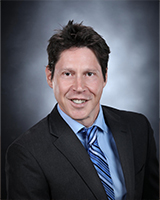
Christopher A. Badurek is Professor of Geographic Information Systems and Co-Coordinator of the Computer Applications Program at State University of New York at Cortland. He earned a BA in Biology from Cornell University, a PhD in Geographic Information Science from the University at Buffalo, and an MBA from SUNY Brockport. With prior support from NASA, NSF, and SUNY, his research integrates AI analytical tools, machine learning, and geospatial data for land use change modeling and large-scale environmental data analytics, such as estimating exurban growth in New York state.
In addition to developing and teaching the interdisciplinary AI ethics courses AI, Technology, and Society and Geo AI for Good, he is leading curriculum development to place AI literacy at the center of the interdisciplinary computing minor at SUNY Cortland, including both generative and agentic AI applications.
Dr. Badurek serves as SUNY Cortland's lead for the SUNY-funded Advancing AI for Public Good collaborative initiative with Binghamton University. An award-winning mentor of both undergraduate and graduate research, he is currently fostering undergraduate AI research across STEM, social sciences, and humanities disciplines at SUNY Cortland in alignment with the AI for Public Good effort.

Jacqueline Bennett is a Professor of Chemistry and Biochemistry at SUNY Oneonta, where she has taught organic and general chemistry for two decades. She earned her Ph.D. in Chemistry from the University of California, Riverside, and holds two U.S. patents in sustainable synthesis. Her green chemistry work earned her the American Chemical Society's Committee on Environmental Improvement Award in 2011. The first patent earned her the Eastern New York Intellectual Property Law Association Inventor of the Year award in 2016.
Dr. Bennett's recent work applies the ethical, discipline-agnostic integration of AI into higher education by building practical tools that solve real problems, including accessibility tools and web apps designed to run locally. She brings a green chemistry lens to AI adoption, applying the same precautionary, cost-benefit thinking she uses in her chemistry research to questions of AI's energy and resource footprint.
Through her role as a SUNY AI for the Public Good Fellow, Dr. Bennett is working to help faculty across disciplines adopt AI thoughtfully, building shareable tools and practices other departments can replicate. In 2026, she was named a SUNY Oneonta Provost AI & Society Innovator in its inaugural cohort, extending that work into a campus-wide leadership role.

Alexis Clifton is the Director for the Teaching and Learning Center at SUNY Geneseo. She has worked in higher education for 26 years, beginning as a community college instructor in rhetoric and composition with a strong focus on online and hybrid learning. In 2017, she joined SUNY as the inaugural Executive Director of SUNY OER Services, advancing open education across the system. Other positions at SUNY Geneseo included working with instructional design and digital accessibility, before moving to the TLC role in 2022. Her career has consistently centered on promoting student access and success, and fostering professional development through collaborative networks.
At SUNY Geneseo, Clifton leads efforts to support faculty navigating evolving student needs, technological shifts including generative AI, and the application of high-impact teaching practices. With academic roots in English Literature and Creative Writing, her current interests lie in the Scholarship of Teaching and Learning (SoTL) across many disciplines. She is currently enrolled in the Learning and Teaching in Social Contexts Ed.D. program at the University at Buffalo. Clifton is committed to modeling lifelong learning, guided by the TLC’s core belief: there is always room to grow in our teaching and professional practice.
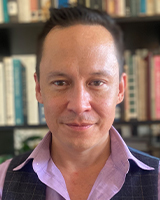
Daniel Fernandez is Instructor of Philosophy in the Humanities, Fine and Performing Arts Department at Nassau Community College (NCC). He was in the inaugural class of SUNY AI Fellows in 2025-2026. As part of a 2026 SUNY Academic Innovation Grant, he is currently working with a team led by Stony Brook University to develop faculty development modules on the responsible use of AI in writing intensive courses. At NCC, he has served as the Coordinator for the Multidisciplinary Course Project, Faculty Advisor to the Philosophy Club and member of the Diversity, Equity and Inclusion Committee. He is formerly a member of the AI for Learning Network through SUNY and Carnegie Mellon University. He received his BA in Philosophy from Binghamton University and his MA and PhD in Philosophy from the New School for Social Research. His research focuses on moral psychology, biomedical ethics, AI ethics, and the ethics of cyberwar.

Dave Ghidiu is an Assistant Professor of Computing Sciences at Finger Lakes Community College and Lead AI Strategist for the FLX AI Hub - a regional initiative bringing practical AI education to schools, businesses, and communities across Upstate New York.
With a Master's in Educational Technology and over two decades of experience in education, Dave has a rare ability to make complex technology feel approachable and immediately useful. His workshops and talks blend hands-on practice with real-world strategy - no jargon, no hype.
He leads FLCC's AI Microcredential program, co-hosts The Immersive Lens podcast on emerging technology, and has spoken at more than two dozen venues across higher education, K-12, healthcare, and industry.
Dave's philosophy is simple: he can teach you how AI works and put the right tools in your hands - but only you can bring your rich experience, unique perspective, and niche expertise to the table. That combination is where the real magic happens. It's a personal journey, and Dave meets people exactly where they are.
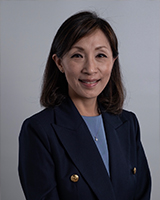
Dr. Namsook Kim is a Clinical Associate Professor in the Department of Educational Leadership and Policy and Assistant Director of the English Language Institute in the Graduate School of Education at the University at Buffalo (UB). Her research and teaching focus on inclusive pedagogy, educational equity, and academic communication literacy development for international and multilingual students.
As an expert in AI-integrated pedagogy, Dr. Kim serves as Principal Investigator for the GLOBAL (Generative Learning Opportunities for Bridging Academic Literacies) Project, which investigates the impact of AI-integrated multimodal pedagogy on multicultural students’ writing/AI literacy and agency. She also leads a 2026-2027 SUNY Academic Innovation Grant project developing high-impact, AI-integrated Open Educational Resources (OER) to support diverse students’ communication literacy, success, and career readiness. At UB, she chairs the UB Curriculum Communication Literacy Sub-committee, aligning campus curriculum with the SUNY General Education Framework.
An active global leader, Dr. Kim recently chaired the TESOL International Association Higher Education Interest Section, hosting several webinars on the responsible and inclusive use of generative AI in higher education. As a SUNY AI for the Public Good Fellow, she is dedicated to promoting equitable, ethical, and transformative AI practices that empower all learners across the disciplines.

Michelle Malinovsky is an Associate Professor and serves as the Instructional Services Librarian at Onondaga Community College (OCC) in Syracuse, NY, where she also teaches English and Creative Writing. Originally from central Pennsylvania, Michelle holds an MLS in Library Science and an MA in English and Creative Writing. Working in higher education since 2012, her instructional philosophy centers on critical inquiry, student agency, and curiosity-driven learning.
As a member of the inaugural cohort of SUNY AI Fellows for the Public Good, 2025-2026, Michelle focuses on the critical intersection of generative AI, information literacy, and human agency. She has presented at academic conferences and facilitated workshops for faculty and librarians embedding ethical GenAI frameworks into curricula, research, and assessment. In addition, she co-authored the Open Educational Resources (OER) textbook Information Literacy: Research with GenAI, which has been adopted across all freshman composition courses at OCC.
At OCC, Michelle chairs the Faculty Senate GenAI Advisory Committee, leading the development of institution-wide policies that provide clear, practical, and ethical guidance for the modern classroom.

Dr. Darin Mihalik is a computational astrophysicist whose research uses machine-learning methods to investigate problems in astrophysics. His work has a particular emphasis on molecular quantum dynamics and the modeling of molecular interactions in astrophysical environments.
Darin has extensive experience with a range of machine-learning approaches, including artificial neural networks, Gaussian process regression, and deep learning. His interests in AI extend beyond its applications in computational physics to its evolving role in scientific research and higher education. He is particularly interested in the responsible and effective use of AI to enhance research and learning while maintaining an emphasis on critical thinking and scientific reasoning.
Darin received his B.A. from Binghamton University, his M.A. from Stony Brook University, and his Ph.D. from the University of Georgia.

Marjorie Lalor Reilly is an Associate Professor of Nursing in SUNY Delhi’s online RN-to-BSN program. Her areas of expertise include online nursing education, instructional technology, healthcare ethics, and the integration of artificial intelligence to support student engagement, critical thinking, and learning. Her teaching experience includes epidemiology, healthcare ethics, nursing education, leadership and management, and online student orientation.
Professor Reilly earned a Bachelor of Arts in Political Science and Philosophy from SUNY Potsdam and an Associate Degree in Nursing from Columbia-Greene Community College. She completed her Bachelor of Science in Nursing and Master of Science in Nursing Education at SUNY Delhi. She is a Certified Nurse Educator through the National League for Nursing and an Accreditation Commission for Education in Nursing (ACEN) Peer Evaluator.
Before joining SUNY Delhi’s full-time faculty, Professor Reilly taught nursing for 15 years at Columbia-Greene Community College and several years as an adjunct instructor at SUNY Delhi. She contributes to curriculum development, assessment, accreditation, and faculty service. Her interests include asynchronous learning environments, instructional technology, and the thoughtful integration of artificial intelligence in higher education. She is enthusiastic about helping students, faculty, and staff use AI responsibly to enhance learning, teaching, creativity, productivity, and professional practice.
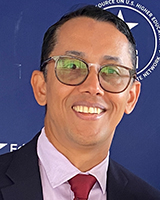
Dr. Shyam Sharma is Professor of Writing and Rhetoric at the State University of New York, Stony Brook. His scholarship focuses on writing in the disciplines, cross-cultural rhetoric, international education, language policy, and the changing dynamics of knowledge production in the context of artificial intelligence. He writes about how universities can sustain intellectual rigor, democratic responsibility, and global engagement amid technological disruption of the expert knowledge ecosystem. His upcoming book Foundations, Fault Lines, and Futures of U.S. International Education explores historical and political drifts that have dismantled international higher education in the US, showing new pathways for rebuilding the field. He has also co-edited a book on AI and higher education and contributed public-facing writing on research ethics and global knowledge ecosystem. A recipient of Nepal Bidya Bhusan gold medal for academic excellence (2000), AAC&U’s Future Leaders Award (2012), SUNY Chancellor’s Award for Excellence in Faculty Service (2021), and the Fulbright Specialist fellowship (2023-26), he serves in several senate leadership positions on campus and in SUNY Faculty Senate, while leading grants and other initiatives supporting research integrity, inclusive pedagogy, and socially responsible scholarship at home and internationally.
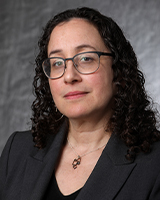
Diane Shichtman, Ph.D., is a Professor in the Department of Computer Science and Technology at Empire State University. She holds a Ph.D. in Science and Technology Studies from Rensselaer Polytechnic Institute, an MBA from the University at Albany, and an M.A. in Media Studies from the New School for Social Research, with a focus on Technology and Society. She is also a certified Project Management Professional (PMP).
Dr. Shichtman’s scholarship spans technology, education, ethics, and society, with a longstanding interest in the social and ethical dimensions of technology and in how those issues are taught and understood. Her areas of expertise include the social and ethical dimensions of technology; AI literacy; and the implications of artificial intelligence for teaching, learning, and higher education.
Her recent work has included research on how students, educators, and community members understand AI and its implications; providing professional development for faculty, professionals, and staff; facilitating ongoing university-wide conversations about generative AI; advancing institutional efforts on AI policy; and rethinking assessment and student learning in an AI-infused environment. She led the development of Empire State University’s AI Literacy: Foundations, Challenges, Responsibilities course and has presented on AI literacy, pedagogy, policy, equity, and responsible AI.
Past Fellows:
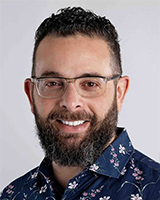
Dr. Sam Abramovich is Associate Dean of Academic Affairs and Associate Professor in the Graduate School of Education at the University at Buffalo (UB), with joint appointments in the Departments of Learning and Instruction and Information Science. He also directs the UB Open Education Research Lab and serves as a UB Micro-Credential Faculty Fellow. Dr. Abramovich’s research focuses on the intersection of emerging technologies, assessment for learning, and the learning sciences, with recent work exploring the implications of generative AI for academic integrity, assessment design, and pedagogical practice.
A frequent presenter at academic and practitioner conferences, Dr. Abramovich has led faculty development efforts on AI and assessment, including talks for SUNY CIT, Play Make Learn, and local educational communities. He actively promotes creative, ethical, and student-centered uses of AI, emphasizing collaboration and transparency.
Through his role as a SUNY AI for the Public Good Fellow, Dr. Abramovich is helping to generate new approaches to both assessment for and of learning in response to generative AI’s disruption of established practices. This work is especially critical for online learning, where traditional models are most vulnerable. He seeks to ensure that SUNY remains a leader in developing valid, reliable, and forward-looking assessment strategies.
Dr. Renu Balyan is an Assistant Professor in the Department of Mathematics, Computer & Information Sciences at SUNY Old Westbury. She earned her doctorate from IIT Delhi and brings over two decades of experience spanning academia, research organizations, and the software industry. Her research centers on natural language processing (NLP), machine learning (ML), deep learning (DL), and the development of computational tools for health and educational applications.
Dr. Balyan’s current projects include advancing intelligent tutoring systems (ITSs), designing ML/DL algorithms for text difficulty assessment in health contexts, creating patient-physician profiles based on their shared communication, and developing NLP models tailored for minority low-literacy patients, focusing on Hispanic breast cancer survivors. She has contributed to numerous federally funded projects supported by NSF, IES, NIH, and ONR, and currently serves as Principal Investigator on three NSF grants in collaboration with leading institutions such as UCSF, Texas A&M San Antonio, Northeastern Illinois University (NEIU), Loyola University and Arizona State University.
Dr. Balyan is an active contributor to the AI research community, serving as a reviewer for top journals in AI, NLP, health, and education, and as a program committee member for multiple international conferences.
Alexis Clifton is the Director for the Teaching and Learning Center at SUNY Geneseo. She has worked in higher education for 25 years, beginning as a community college instructor in rhetoric and composition with a strong focus on online and hybrid learning. In 2017, she joined SUNY as the inaugural Executive Director of SUNY OER Services, advancing open education across the system. Other positions at SUNY Geneseo included working with instructional design and digital accessibility, before moving to the TLC role in 2022. Her career has consistently centered on promoting student access and success, and fostering professional development through collaborative networks.
At SUNY Geneseo, Clifton leads efforts to support faculty navigating evolving student needs, technological shifts including generative AI, and the application of high-impact teaching practices. With academic roots in English Literature and Creative Writing, her current interests lie in the Scholarship of Teaching and Learning (SoTL) across many disciplines. She is currently enrolled in the Learning and Teaching in Social Contexts Ed.D. program at the University at Buffalo. Clifton is committed to modeling lifelong learning, guided by the TLC’s core belief: there is always room to grow in our teaching and professional practice.
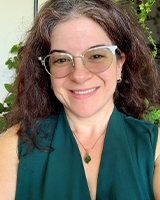
Lauren deLaubell is the Information Literacy/Instruction Coordinator at SUNY Cortland Memorial Library. She was awarded the SUNY Chancellor’s Award for Excellence in Librarianship in 2018. She received her MS in Information Science from the University at Albany, and her research interests include information literacy instruction, artificial intelligence, assessment, and gamification.
Dr. Babette Faehmel teaches U.S. History, Black History, Women's and Gender History, and Foundations of Free Society at SUNY Schenectady County Community College. A former SUNY Civic Education and Engagement and Civic Discourse Fellow, she has long been interested in how information networks shape learning and understanding. In 2022, she spent a sabbatical at SUNY Empire State exploring the intersection of education and digital tools and the literacy challenges due to the increasing dominance of social media. Returning to her own campus, she initiated a Learning Community focused on digital and Web2.0 literacy. Following the release of ChatGPT-3.5, she pivoted to focus on generative AI. Dr. Faehmel has led multiple professional development initiatives on her campus, and served as the faculty lead for a SUNY Innovative Instruction Technology Grant on AI in teaching and learning. She was a member of the inaugural cohort of the AI 4 Learning Network, funded by SUNY OER Services and the Axim Collaborative, and a recipient of the 2025 FACT2 Award for Excellence in Instruction. She further produces the SUNY Schenectady County Community College podcast "Many Voices, One Call" and has hosted two episodes on AI’s implications for society, teaching, and learning.
Jing Betty Feng, Ph.D., is a Professor of International Business at Farmingdale State College (SUNY). She earned her BA and MBA from Michigan State University and her Ph.D. from Georgia State University. She worked in global supply chain management with global firms before transitioning into higher education.
Dr. Feng’s research examines intercultural interactions, sustainable internationalization, and the intersection of technology and human behavior. Recent projects include investigating gender dynamics in AI-mediated negotiations and the impact of AI literacy on learning. Her work has been published in leading journals such as the Journal of Business Research and Management and Organization Review. She leads a grant-funded, multidisciplinary initiative developing online learning modules on sustainable business and technology for small businesses and marginalized learners, and has also held leadership roles with the Academy of International Business Teaching and Education Shared Interest Group.
Dedicated to experiential learning, Dr. Feng has advised student teams in the NYS Business Plan Competition and led the International Business Club. She currently directs the annual Innovation Challenge, fostering creativity and collaboration across disciplines. Her commitment to mentoring and real-world problem-solving has been recognized through awards and grants that advance community-focused initiatives.
Daniel Fernandez is Instructor of Philosophy in the Humanities, Fine and Performing Arts Department at Nassau Community College (NCC). At NCC he serves as the Coordinator for the Multidisciplinary Course Project, through which he has conducted faculty development seminars on AI literacy, ethics and pedagogy. He also serves as Faculty Advisor to the Philosophy Club and is a member of the Diversity, Equity and Inclusion Committee. He is formerly a member of the AI for Learning Network through SUNY and Carnegie Mellon University. He received his BA in Philosophy from Binghamton University and his MA and PhD in Philosophy from the New School for Social Research. His research focuses on moral psychology, biomedical ethics, AI ethics, and the ethics of cyberwar.

Dana J. Gavin, PhD, is the Director of the Writing Center at Dutchess Community College, USA. She recently earned her PhD in English (with concentrations in Literature & Culture and Technology & New Media) from Old Dominion University. Her research into serialized crime fiction produced through the nineteenth-century British publishing industry teed her up for the November 2022 crash-landing of ChatGPT into our educational worlds. Teaching writing and facilitating learning experiences where people can become confident communicators are her primary objectives.

Allison Hosier is the Head of Information Literacy at the University at Albany. She is the author of Using Context in Information Literacy Instruction (American Library Association, 2022). In addition to her work in information literacy, Allison has become interested in the role of generative AI in teaching and learning. She has been providing professional development on this topic to librarians, faculty, and instructional designers since 2023.
Jonathon Little is a Professor of Geography at Monroe Community College where he teaches Physical Geography and Geospatial Technology courses. He received a SUNY IITG grant titled “Using AI effectively in Introductory Science and Social Science Courses” in 2024, and is the Principal Investigator of a NSF ATE grant focused on developing GeoAI curriculum, mentoring, and paid internships for students in the Geospatial Information Science Technology (GIST) program at MCC (2025-2028, awarded $695,500). He has received two past NSF ATE grants ($800,000+), and has developed an extensive number of GIST internships across New York state, and the globe, from Kazakhstan, Germany, Turkey, and more. Jonathon Little received the 2017 Lifetime Achievement in Geospatial Two-year College Education from the GeoTech Center, the 2018 New York State GIS Association Individual Contribution to the Profession, Fulbright Specialist in 2019, and the Dale P. Parnell Distinguished Faculty Recognition award in 2022 from the AACC.
Michelle Malinovsky is an Associate Professor and serves as the Instructional Services Librarian at Onondaga Community College in Syracuse, NY, where she also teaches English and Creative Writing. Originally from central Pennsylvania, Michelle holds an MLS in Library Science and MA in English and Creative Writing.
Michelle's professional and instructional philosophy centers on fostering critical inquiry and helping students develop ownership of their learning by harnessing their innate curiosity. She advocates for the responsible use of digital tools to support human insight and creativity. Her recent work focuses on the intersection of Generative AI and information literacy, with attention on developing GenAI-focused instructional strategies. Drawing on continual coursework and professional development, she created and led workshops for faculty and librarians on the ethical integration of GenAI in the framework of information literacy into curriculum and assessment. She also chairs a Faculty Senate ad-hoc AI committee charged with developing policies to support faculty and provide clear guidance for students.
Beyond her roles at OCC, Michelle is often lost in a book and trying to write one, and loves to dance, game, and travel.
Shayan Mirzabeigi is an Assistant Professor of Sustainable Construction Management in the Department of Sustainable Resources Management at the State University of New York College of Environmental Science and Forestry (SUNY ESF). He earned his B.Sc. in Architectural Engineering from the University of Tehran (2016), his M.Sc. in Building Engineering from Politecnico di Milano (2020), and his Ph.D. in Sustainable Construction Management from SUNY ESF (2024). With degrees in three majors from three countries, his research is highly interdisciplinary and collaborative. His current research interests cover: AI and Optimization for Buildings; Sustainable Construction; Energy Efficiency in the Built Environment; Building and Urban Energy Simulation; Climate Resilience; Building Envelope Systems; Human-building Interaction; Indoor Environmental Quality; and Construction Automation.
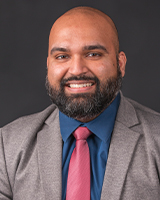
Vikram Pagpatan, MS, OTR/L, ATP, FAOTA is a nationally recognized occupational therapist, educator, and assistive technology specialist whose career bridges health professions education, technology, and equity. He currently serves as Associate Professor and Admissions Coordinator for the Occupational Therapy Program at SUNY Downstate Health Sciences University, where he advances innovative teaching and interprofessional learning models.
As a Fellow of the American Occupational Therapy Association (FAOTA) and a credentialed Assistive Technology Professional (ATP), Dr. Pagpatan has authored and edited influential scholarship on inclusive design, the interdependence framework of assistive technology, and the integration of artificial intelligence into clinical and educational practice. His vision emphasizes technology not merely as a tool, but as a driver of human participation, equity, and sustainability.
At SUNY, he has championed initiatives that link emerging technologies to student success, accessibility, and institutional innovation. His leadership includes serving on national and state-level professional boards, where he has shaped policy, curriculum, and advocacy efforts that expand access to technology-enabled care and learning.

Rachel Elliott Rigolino teaches in the English Department and serves as an educational technology specialist at SUNY New Paltz. Her recent work focuses on the intersection of writing instruction/critical reading and generative AI. A former SUNY Online Teaching Fellow, Rachel has been exploring generative AI’s impact on writing instruction since the release of ChatGPT in late 2022. She has revised her own courses accordingly and facilitates workshops where faculty share their strategies for addressing AI use, whether encouraging, limiting, or banning it in the classroom.
Rigolino holds certifications in AI for Decision Making (Wharton), Instructional Design (Online Learning Consortium), and Teaching with OER (Lumen Learning). She has written for Inside Higher Ed and The Chronicle of Higher Education on topics related to writing instruction and technology. She also maintains an online repository of articles and resources on generative AI, designed to support faculty navigating its classroom implications.
When not in the classroom with her first-year students, Rachel is often exploring the latest generative AI tools and research. She does so primarily out of intellectual curiosity but also in the hopes of ensuring her pedagogy stays ahead of her students’ prompts.
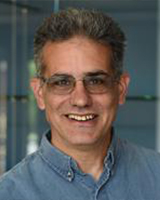
Steven M. Schneider is Professor in the Program in Information Design & Technology and Co-Director of the Artificial Intelligence Exploration (AIX) Center at SUNY Polytechnic Institute, where he has served since 1991. His expertise encompasses technology adoption, user experience studies, digital platform development, and educational technology integration.
Dr. Schneider was among the earliest SUNY faculty to teach online, inspired by the system's Lotus Notes platform. He previously served as Campus Lead for Google Career Certificates and is developing "AI for All" curricula that enable students to engage with open-source AI tools responsibly, securely, and collaboratively.
As Co-Director of the AIX Center, he leads initiatives exploring AI applications across diverse sectors and techniques. He co-conceptualized the AIX Workbench, an open-source platform enabling secure, local AI experimentation for faculty and students. His community-building approach includes facilitating working groups, livestream discussions, and collaborative learning environments.
Dr. Schneider earned his Ph.D. in Political Science from MIT and is co-author of the award-winning book Web Campaigning (MIT Press, 2006). His research on web-based communication and digital archiving has been supported by grants from the Library of Congress, Pew Internet Project, and other major institutions. He brings over three decades of SUNY experience, including service as Interim Provost (2018-2022).
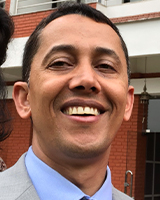
Dr. Shyam Sharma is a Professor in the Department of Writing and Rhetoric at Stony Brook University. His scholarship and teaching focus on writing in the disciplines, cross-cultural rhetoric, international education, and new media in education. A recipient of major awards, including the Association of American Universities and Colleges’ K. Patricia Cross Future Leaders Award (2012) and SUNY Chancellor’s Award for Excellence in Faculty Service (2021), he serves as a national Fulbright Specialist (2023-26). Prof. Sharma contributes to faculty development internationally, including to address emerging challenges of ethical conundrums and knowledge-based inequalities exacerbated by the current model of artificial intelligence. He has co-edited two books on AI and higher education, as well as publishing several articles/chapters and op-eds. He serves as Chair of his university Senate’s Advisory Subcommittee on AI, as well as leading a faculty support grant and providing departmental leadership on the impact of AI on student learning.
Diane Shichtman, Ph.D., an Associate Professor at Empire State University in the Department of Computer Science and Technology has a robust interdisciplinary and multidisciplinary background, holding a Ph.D. in Science and Technology Studies from Rensselaer Polytechnic Institute, an MBA from the University at Albany, and an M.A. from the New School for Social Research. She also is a certified Project Management Professional (PMP). Dr. Shichtman’s research spans technology, society, and education, with publications and presentations exploring the ethical implications of technology in education. Her work, such as "Using the Pandemic as a Case Study: Teaching Social and Ethical Issues," reflects her commitment to integrating real-world challenges into the curriculum.
As the AI Fellow for Empire State University’s Center for Teaching and Learning (2024-25 and 2025-26), she has been supporting consideration of AI within the university and providing professional development to faculty, professionals, and staff, helping these groups think about how to use GenAI appropriately and efficiently, encouraging consideration of what students need to know, and fostering conversations about how it might be used suitably in courses. She led the development of an online AI Literacy course for students and is developing an ethics in data science and artificial intelligence course.

Dr. Johnny Stein is an Associate Professor of English and College Connections Liaison at Jamestown Community College, where he teaches composition, inquiry, and literary studies across multiple modalities. His scholarship focuses on the intersection of rhetoric, technology, and artificial intelligence, a line of inquiry that began during his doctoral research at Texas Woman’s University and The University of Texas at Arlington.
On the General Education Committee at JCC, Dr. Stein has worked to advance AI literacy for both students and faculty. Since 2023, he has piloted AI-enhanced English Composition and inquiry courses, including his first-year seminar, Gamer’s Guide to the Galaxy. He co-leads JCC’s AI Task Force, shaping institutional policy, faculty training, and syllabus language for responsible AI use. He has also developed instructor-facing AI chatbots that help faculty experiment with assignment design and ethical integration.
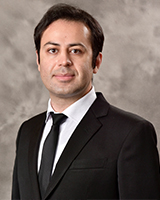
Mohammad Tajvarpour is an Associate Professor at the State University of New York at Oswego, specializing in the integration of artificial intelligence with business. His teaching spans MBA and undergraduate programs across the United States and Canada, where he has designed and delivered innovative courses that connect academic theory with industry practice. Most notably, in June 2023 he pioneered the world’s first university-level course of its kind, ChatGPT for Business, preparing students and professionals to apply generative AI in real-world organizational contexts.
His research examines the intersections of technology, innovation, and business, with a focus on how AI and digital platforms transform strategy, decision-making, and consumer engagement. Mohammad has published peer-reviewed articles and contributed book chapters on crowdsourcing, crowdfunding, and AI-business integration, advancing both scholarly knowledge and practical applications.
In addition to his teaching and research, Mohammad regularly conducts professional workshops on AI in business across the US and Canada. These workshops provide actionable insights and hands-on guidance for students, educators, and industry leaders, helping them navigate opportunities and challenges in today’s AI-driven economy.
Through his scholarship, teaching, and outreach, Mohammad continues to shape the evolving dialogue on how artificial intelligence and emerging technologies redefine the future of business.

Shawna Taylor, Ed.D. is an Assistant Professor of Elementary Education and Reading at the State University of New York Oneonta. A first-generation college graduate, she brings a global perspective to her teaching and research, informed by her experience living and teaching in Asia.
Her scholarship centers on the integration of artificial intelligence in teacher preparation, with an emphasis on equity and innovation. She is a research partner on SUNY’s multi-campus initiative Systematic Infusion of Artificial Intelligence in Teaching, where she helps design frameworks for AI-infused instruction through pedagogical partnerships, SWOT analysis, and reflective teaching.
Dr. Taylor’s recent projects include AI as a Pedagogical Partner: Guiding Preservice Teachers in Adapting Elementary ELA Lesson Plans and Chat With Me: Bridging Cultures Through Conversation, a study on intercultural communication between multilingual learners and teacher candidates. She also engages in ongoing professional development, participating in workshops such as Rethinking Assessment in the Age of AI and Generative AI for Visual Content Creation.
Her work positions AI not as a replacement but as a partner, preparing future teachers to adapt and thrive in evolving educational landscapes.