

Civic Education and Engagement and Civil Discourse Fellows will advance SUNY’s shared commitment to civic engagement as an essential outcome of higher education and will work to advance civic discourse among students, faculty, and staff across campus communities.
Current SUNY Civil Discourse and Civic Education and Engagement Fellows:
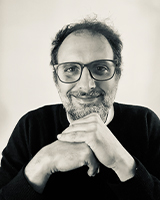
Leandro Benmergui is Associate Professor of History and Chair of Latin American, Caribbean, and Latinx Studies at Purchase College, SUNY, where he also directs Casa Purchase, an outreach center for Latin American Studies. His areas of expertise include modern Latin American history, urban history, housing and development, Latinx studies, oral history, and public humanities. His research examines housing, urban reform, and development in Cold War Latin America, with particular emphasis on Argentina and Brazil.
Leandro is also Co-Director of VOCES: Oral Histories and Spanish for Heritage Speakers, an NEH-funded initiative that uses oral history and digital storytelling to document Latinx experiences and connect students, families, and communities. His teaching and public work explore migration, citizenship, memory, identity, and the ways personal narratives can foster listening and dialogue across differences. Through Casa Purchase and other initiatives, he has developed sustained partnerships with schools, libraries, cultural institutions, and community organizations throughout Westchester County. He received the SUNY Chancellor’s Award for Excellence in Faculty Service.
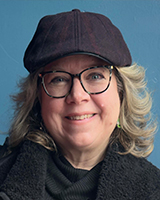
Dr. Lisa D'Adamo-Weinstein is a photographer, multidisciplinary artist, and storyteller. Currently, she is a Visiting Associate Professor in the Department of Arts & Media and the inaugural Director of General Education at Empire State University. Her expertise lies at the intersection of narrative inquiry, storytelling, and creative placemaking that utilizes community engagement and art as creative and democratic forums. She recently served as the 2025–2026 Susan H. Turben Chair in Mentoring and previously held the role of Dean of Student Affairs and Academic Services.
A proud SUNY alumna (Binghamton University, B.A. in English & General Literature) and first-generation college student, Dr. D'Adamo-Weinstein holds an M.A. and Ph.D. in Language Education from Indiana University, Bloomington. Her career bridges qualitative research with high-impact applied learning. As a New York State Council on the Arts (NYSCA) grant recipient, she spearheaded Arts in the Parks: An East Greenbush Community Arts Experience, transforming parks into active creative spaces through civic engagement, arts education, and community involvement.
As a 2026–2027 SUNY Civil Discourse and Civic Education and Engagement Fellow, she will focus on scaling multidisciplinary applied learning frameworks that champion ethical advocacy and dialogue across SUNY using creative placemaking as avenues for civic engagement.
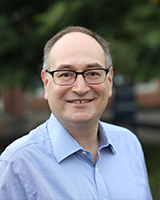
Aaron Herold is Associate Professor of Political Science and International Relations at SUNY Geneseo, where he is coordinator of Legal Studies and co-director of the Forum on Constitutionalism and Democracy, a grant-funded program that sponsors programming and fosters campus conversations about civic education and liberal democracy. He has an enduring interest in the connection between liberal education and civic life. He teaches courses on political philosophy and constitutional law, and his research focuses on the American constitutional tradition, the political philosophy of the liberal Enlightenment, and the thought of Alexis de Tocqueville—especially as these pertain to the public role of religion in democracy. His first book, The Democratic Soul: Spinoza, Tocqueville, and Enlightenment Theology, was published by University of Pennsylvania Press in 2021. His work has also appeared in The American Political Science Review, Political Research Quarterly, The Review of Politics, Perspectives on Political Science, and several edited volumes. He is currently working on a book that uses Tocqueville to understand the ascendancy of revolutionary psychology in contemporary partisan politics. He has a B.A. from Emory University, an M.A. from the University of Toronto, and a Ph.D. from the University of Texas at Austin.
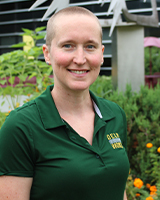
Elizabeth Hoyt serves as the Assistant to the Vice President for Student Life and Assistant to the Chief Diversity Officer at SUNY Delhi, where she supports student engagement, inclusion, and campus initiatives that strengthen community and belonging. She also serves as the Campus Voter Coordinator and leads Delhi Broncos Vote, SUNY Delhi’s nonpartisan voter engagement initiative. Under her leadership, Delhi Broncos Vote has grown into an established campus civic engagement program recognized for its voter engagement efforts and student affairs programming. Through Delhi Broncos Vote, she develops voter education and registration efforts, civic engagement programming, and opportunities for students to connect civic participation with community and service.
Elizabeth's work centers on making civic engagement accessible, inclusive, and meaningful to students while helping them develop a sense of civic identity with the understanding that they have a place, voice, and role within their communities. She is particularly interested in empowering students to recognize their capacity to make informed choices, take action, and contribute to the communities of which they are a part of. Her work explores the intersection of civic education, student development, belonging, and institutional responsibility, with a focus on creating sustainable opportunities for students to learn, engage, and act.
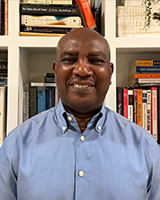
George Keteku teaches political science at SUNY Westchester Community College. He received his graduate education at Binghamton University (SUNY). George’s interest is in collective action problems and the challenges posed by the mobilization of bias in democracies. As a Fulbright-Hayes scholar in 2025, he participated in a project that examined creativity in civic discourse and civil engagement on Climate Change in Tanzania. George plans to develop this approach and use political artifacts in American politics as teaching tools in contested engagements.
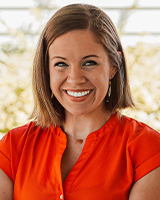
Kristin (Kricky) Ksiazek is a civic researcher and High Road Program Coordinator with the Cornell University ILR Buffalo Co-Lab, where she brings 15 years of experience in education, nonprofit leadership, community research, and civic engagement. She holds a Master of Public Affairs from the Cornell Institute for Public Affairs, a Master of Arts in Education from the University of New Mexico, and a BA in Economics from the University of Notre Dame.
For the past five years, Ksiazek’s work at the ILR Buffalo Co-Lab has spanned social-sector research, collaboration, civic engagement, and program coordination. She directs Cornell’s High Road Fellowship Program, a longstanding engaged-learning initiative that connects Cornell and SUNY Buffalo State University undergraduates with community organizations in Western New York. She co-teaches ILRGL 3052, the program’s curriculum, which explores economic and community development, post-industrial cities, community-based participatory research, racial equity, narrative, and storytelling. Her approach centers community members as experts and partners in research.
Ksiazek has published research on the social-sector labor market, Indigenous communities in Western New York, workplace ownership models, and the experiences of Black women in the workplace in Buffalo-Niagara. She also brings extensive experience in government and community relations, communications, and organizational strategy.
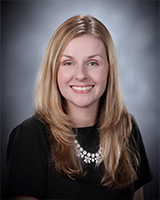
As a licensed clinical psychologist and forensic evaluator, Dr. Lister worked closely with individuals involved in the criminal justice system and victims of violence. Her work in outpatient and inpatient settings highlighted the importance of professional civic engagement and discourse and continues to be central to her teaching and scholarship. At SUNY Cortland, Dr. Lister developed the forensic psychology minor and four courses focused on the intersection of psychology and the law. Civic discourse is integral to all of Dr. Lister’s classes as students focus on current issues such as criminal justice reform, human trafficking, and working with marginalized groups involved in the criminal justice system. Her commitment to creating learning opportunities that strengthen media literacy and highlight the importance of ethical and professional practice has extended to her work supervising student research assistants. These projects have examined how the media frames mass shootings and sexual abuse allegations as well as popular media portrayal of psychopathy and intimate partner violence.
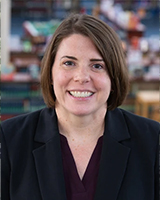
Dr. Angela McGowan-Kirsch is an Associate Professor of Communication at SUNY Fredonia, specializing in rhetoric, political communication, leadership, and media literacy. She chairs the American Democracy Project Committee, leads the Civic Discourse General Education Competency Task Force, and coordinates the Leadership Studies minor. In these roles, she advances initiatives that promote informed, responsible, and inclusive civic participation.
Her scholarship explores college students’ democratic engagement, public discourse, and strategies for fostering civil dialogue. She is the editor of Encouraging College Students’ Democratic Engagement in an Era of Political Polarization (2025) and has published on media literacy, open pedagogy, and collaborative, student-centered learning.
Dr. McGowan-Kirsch is a recipient of the AASCU/Unite America 2026 Innovations in Democracy Grant, supporting campus efforts to strengthen democratic engagement and civic learning. She is also a 2023 recipient of the SUNY Chancellor’s Award for Excellence in Teaching.
Through her research, teaching, and service, Dr. McGowan-Kirsch works to strengthen civic education, equip students for meaningful democratic participation, and foster productive civic discourse across differences.
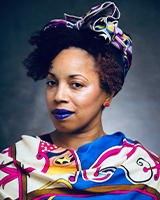
Dr. Shamika Ann Mitchell is Associate Professor of English at Rockland Community College, State University of New York. Her interests are Hip Hop, American literature, comics, popular culture, ethnicity, identity, and subjectivity. She is the creator of #SalaamFandom, an initiative to celebrate and uplift Muslims in all aspects of fandom. A lifelong nerd and geek, she has been a speaker at various events and programmes, including New York Comic Con, Wizard World Philadelphia, FIBDA (Algiers Comic Con), San Diego Comic-Con, Women in Comics Con, MCM London, and the Black Comic Book Festival at the Schomburg Center for Research. Her innovative approaches to curriculum earned her the SUNY FACT2 Excellence in Instruction Award and the SUNY Chancellor’s Award for Excellence in Scholarship and Creative Activities. For this 2026–2027 SUNY Civil Discourse and Civic Education and Engagement Fellowship, Dr. Mitchell will explore the intersections of civil discourse and civic engagement with fandom spaces.
Her writing has been published in various texts, including the Harvard Anti-Racism Policy Journal, Campus News, Unstable Masks: Whiteness and American Superhero Comics, Black Muslim Reads, and Icons of Hip Hop. She serves as Editor and Creative Guide for Unstoppable Comics, and she is the Editor for RAE Comics. She is a member of Women in Comics (WinC) NYC Collective International and is Editor-in-Chief of WinC Magazine.
As a longtime advocate for intercultural learning, Dr. Mitchell is a SUNY Collaborative Online International Learning (COIL) faculty member and COIL Ambassador. Her global partnerships were with universities in China, Brazil, Mexico, Iraq, and Egypt. She is a member of various organizations, such as the East-West Center, the Freedom to Read Foundation, the American Library Association, and she participates with PolicyLink and the Council on Foreign Relations. A former Visiting Scholar in Residence and Faculty Associate at New York University, Dr. Mitchell continues to be involved with the Institute for Public Knowledge Race and Public Space working group. In addition to her community work, she is a certified foster parent in NYC.
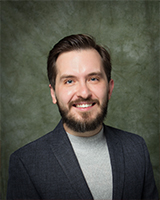
Robert A. Myak is a lecturer of Spanish at Binghamton University. He earned his PhD in Spanish and Portuguese from Princeton University in 2023; during his doctoral studies, he was a visiting doctoral researcher at the University of Granada and collaborated with La Otra Edad de Plata research group at La Universidad Complutense de Madrid.
He later held a postgraduate research fellowship and was appointed lecturer of Spanish at Princeton, where he taught about postwar social and cultural resistance from 1939 to 1964. He has also taught Spanish at the University of Kentucky and the University of Notre Dame.
Myak has presented his research at conferences across North America and Spain, and his published work on hunger and gender violence appears in Ópticas femininas do terrorismo de Estado: actitudes sociais, violencias sexuadas e xestión de pasados traumáticos. Furthermore, he has two forthcoming book chapters: one on the posthumous repatriation of Juan Ramón Jiménez’s mortal remains in an edited volume on the tombs of major Spanish poets and another on adultery and non-normative relationships in Rafael Chirbes’s París-Austerlitz, in an edited collection on adultery in modern and contemporary Spanish literature.
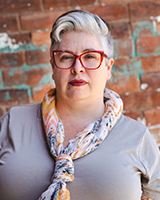
Caroline N. Sharkey, PhD, LICSW (she/they) is an Assistant Professor at the University at Albany School of Social Welfare and a licensed independent clinical social worker with 30 years of experience as an educator, community advocate, psychotherapist, clinical supervisor, and community-engaged researcher. Their research and practice examine the impact of trauma and historical trauma on young people in urban communities, exploring how socially engaged art, digital storytelling, restorative practices, civil discourse, and youth civic engagement can foster positive youth development, empowerment, and reclamation while mitigating community and state-sanctioned violence.
Caroline's work pushes social workers into non-clinical, community-facing roles, and as an educator, she confronts curriculum violence through culturally sustaining, trauma-informed/trauma-responsive andragogy/pedagogy. She has led trauma-informed and crisis-response trainings nationally for schools, universities, courts, juvenile circuit judge coalitions, libraries, and arts and community organizations, building capacity for the kind of dialogue-based, restorative work central to civil discourse and civic engagement.
Caroline is the former co-director of the longest inner-city democratic free school in the United States and served as the Board President of the Georgia Conflict Center, advancing community conflict resolution and restorative justice practices. They currently serve as CSWE's national co-chair for the Human Behavior in the Social Environment track (2026–2028).
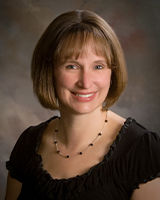
Professor Karen Wicka has been a Criminal Justice Professor at Genesee Community College for over 17 years. She studied political science at Potsdam College and earned a Juris Doctor from Albany Law School, where she was a member of the Albany Law Review and Moot Court Board. Her areas of expertise include Criminal Law, Constitutional Law, and Ethics in Criminal Justice, focusing on the Supreme Court, appellate process, and case analysis. She presents Supreme Court Update at the Criminal Justice Educators Association of New York State (CJEANYS) conference and has presented on Academic Freedom: The Legal Side, Court and Police Reform, and Bail Reform and Its Impact. Professor Wicka believes a thriving democracy depends on informed and engaged citizens. She incorporates civic education into her curriculum, emphasizing government, citizens’ rights, and public policy. She encourages students to engage in civic discourse and consider other perspectives. Professor Wicka coordinates the Criminal Justice Program curriculum and serves as Coordinator of the Honors Program. She is a recipient of the SUNY Chancellor’s Awards for Excellence in Teaching and Excellence in Faculty Service. She coordinates events with agencies in Genesee County, including the Sheriff’s Department, Stop-DWI, and the Crime Victim Advocacy Week planning committee.
Past Fellows:

As a long-time New Jersey native, Professor Chung has made it her lifetime mission to be an active contributing citizen to the local community, while working to advance the representation and participation of immigrant and racially underrepresented groups in local civic activities and politics.
She was personally inspired by the unique struggles faced by immigrant families and her personal experiences as an Asian American “outsider” in neighborhoods adapting to increasing racial and ethnic diversity. Through her research and volunteer work with nonprofits, she learned how central local elections and civic education is to shaping segregation, educational equity, political empowerment, race relations, and social emotional learning for future generations. As a result, she has been actively involved with grassroots political campaigns, numerous parental advisory boards and international events for her local public school system, and philanthropic work with NY and NJ organizations throughout her life. She views her local civic engagement as one of privilege and obligation as a U.S. citizen and daughter of immigrant and is committed to diversifying Asian, Asian American, and immigrant engagement within local communities through civic education, coalitional partnerships, and cultural and political empowerment.
As a long-time faculty member at the University at Albany, Professor Chung began with research interests in cross-racial coalitions, ethnic enclaves, and ethnic organizational politics and has since expanded to include the role of immigrant political elites in urban growth and redevelopment; gender roles and emotional dynamics within immigrant families; and the globalization of higher education in the new knowledge economy. She is a Fulbright Scholar (South Korea); has served as a member of the University’s Committee on Racial Justice, the Refugee Advisory Committee, and the Provost’s Fellow on Internationalization Collaboration and Initiatives; and consults for the Koreatown Youth and Community Center in Los Angeles.
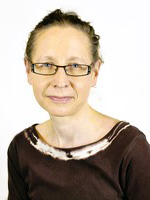
Professor Faehmel teaches US history and Diversity, Equity, and Inclusion at SUNY Schenectady County Community College (SUNY SCCC). She has revised her US history resources to incorporate information literacy and a stronger focus on historical, political, cultural, and legal forces that both encourage and discourage diversity, inclusion, and equity in the US. Her course assignments ask students to draw connections between past and current events and to analyze power and cultural dynamics. Professor Faehmel has served as the college's Student Mentoring Program coordinator, and as an Early College mentor, and she used her work with students in both programs to build civic literacy skills early in their academic careers. She has a track record of working with local activists and organizations engaging in deliberative dialogue across differences. She actively engages faculty and staff from across SUNY campuses to deliver civic education opportunities. Professor Faehmel is a writer of multiple op-eds and she is the host and producer of SUNY SCCC's own podcast Many Voices, One Call. She is committed to viewpoint diversity and communication skills as a means of mending partisan divisions. SCCC CDO states that Prof Faehmel “doesn’t shy away from sensitive topics, but approaches them with empathy, collaborative dialogue, and thorough preparation and research.” Her most recent project focuses on collaborating with other SUNY campuses to develop trainings in AI literacy for faculty, staff, and students.
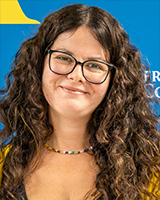
Angela Graves is an Associate Professor in Social and Behavioral Sciences at SUNY Alfred State College with a Ph.D. in political science from the Maxwell School of Citizenship and Public Affairs at Syracuse University. Originally from the Washington, D.C. area, she moved to Eastern Europe to study post-communist transition firsthand, earning her BA in Romania and her MA in Hungary. Her research focuses on political culture, globalization, and civic education through a comparative lens. She is a member of the SUNY Council on Assessment and the national Multi-State Collaborative for College Civic Learning and Democracy Engagement (CLDE) Indicators Working Group, where she contributes to conversations about democratic education and how institutions can better prepare students for civic life. Dr. Graves has also served her community as a zoning and planning board member, election inspector, Census enumerator, and volunteer instructor for the Cornell Prison Education Program. In addition to her academic work, she coaches professionals and their families navigating international assignments, drawing on her background in cross-cultural communication. She was named a SUNY Civic Education and Engagement and Civil Discourse Fellow (2024 & 2025), a College Presidents for Civic Preparedness Faculty Fellow with the Institute for Citizens & Scholars, and the recipient of a Project Pericles Civic Engagement Mini-Grant (2025).
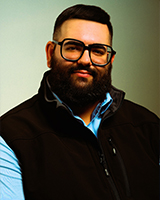
Rumiz James "R.J." Haq is the Assistant Director of Civic Engagement at the University at Buffalo (UB), where he connects students to civic initiatives and fosters community involvement. A Buffalo Public Schools graduate and lifelong Western New Yorker, he earned his B.A., M.A., and Ph.D. in Political Science from UB, specializing in American politics, civic engagement, and voter participation. R.J. focuses on civic engagement program development, voter participation strategies, and student activism support. He chairs the UB Votes Committee, where he has expanded a nonpartisan coalition of 35+ partners, secured a campus polling site, and coordinated Get-Out-The-Vote (GOTV) efforts that reached thousands of students and community members. He launched the Ambassadors of Civic Engagement (ACE) Internship Program, equipping students with organizing and leadership skills—with the first cohort earning the 2025 Empire State Service Corps Collaborative Impact Award. Beyond campus, R.J. founded the WNY GOTV Coalition under NAACP Buffalo and Citizen Collab, a 501(c)(3) organization supporting community-based voter mobilization. A dedicated educator, he has taught 23 courses in American Politics and continues to integrate Civic Engagement into academic courses. R.J. previously held positions at Medaille University, SUNY Research Foundation (SUNY Fredonia), Partnership for the Public Good, and VOICE Buffalo.
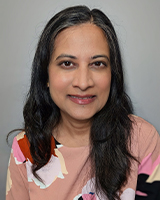
Professor Joseph is focused on promoting civic literacy and equipping students with knowledge to advocate for change and take action in their communities. Professor Joseph’s civic engagement journey began with a degree in law where she primarily focused on elder law, real estate and family law. From this experience, she learned the importance of civic education and how integral it is to the rights of citizens. She also developed a strong belief in information literacy and the importance of researching reliable information to educate oneself. This led her to pursue a career in academic librarianship at the college level. Through her work as a librarian and professor, she recognized the need to reach younger generations and went on to co-found the BridgeNCC Civics Club. She also organizes and co-moderates deliberative dialogues which draw the NCC community and have been key to understanding and awareness of issues on the local and national level. She is the co-chair of the Civics Engagement Subcommittee and assists with planning and execution of events to engage local officials, community organizations and campus community. Professor Joseph also actively collaborates with the SUNY + Team to advance best practices in civic engagement and applied learning across SUNY campuses.
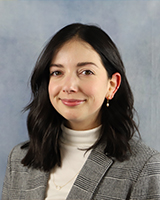
In her professional duties at SBU, Ashley works directly with students to provide leadership and support for civic activities such as voter registration and education campaigns, coordinating elections-related activities at the University’s polling site with Suffolk County Board of Elections, and designing and strengthening opportunities to implement civic engagement outreach efforts through the department, school, and university-wide programming. Under her leadership, she and her team launched the “Democracy 101” program with the goal of educating students about the importance of civic engagement in their local and global communities. SBU’s redesign of orientation allowed her to restructure voter registration on campus, registering an average of 2,000 students to vote each year. Through the Center for Civic Justice's Community Dialogue series, she engages students, staff, and faculty in important civic discourse on some of today's most pressing issues, fostering a safe environment for open discussion. Through her strategic planning efforts, SBU received a Highly Established Action Plan recognition and a spot on the list of 2024 Most Engaged Campuses for College Student Voting. Prior to joining SBU, she worked for Nancy Goroff’s congressional campaign and was a legislative aide for the Suffolk County Legislature.
As a licensed clinical psychologist and forensic evaluator, Dr. Lister worked closely with individuals involved in the criminal justice system and victims of violence. Her work in outpatient and inpatient settings highlighted the importance of professional civic engagement and discourse and continues to be central to her teaching and scholarship. At SUNY Cortland, Dr. Lister developed the forensic psychology minor and four courses focused on the intersection of psychology and the law. Civic discourse is integral to all of Dr. Lister’s classes as students focus on current issues such as criminal justice reform, human trafficking, and working with marginalized groups involved in the criminal justice system. Her commitment to creating learning opportunities that strengthen media literacy and highlight the importance of ethical and professional practice has extended to her work supervising student research assistants. These projects have examined how the media frames mass shootings and sexual abuse allegations as well as popular media portrayal of psychopathy and intimate partner violence.

As Director of Buffalo State’s community engagement center, Ms. Rao works with faculty, students, staff, and community partners to support campus-community partnerships and civic engagement. She grew the community based academic service-learning program from the ground up with 7 courses in AY04/05 to 144 courses involving 85 faculty who involve over 2,000 students annually. She co-chaired a BSC presidentially appointed Civic Action Plan committee to create and implement an institution-wide civic engagement strategic plan. She supported faculty community-engaged scholarship and research. She oversaw the development of an online faculty library resource guide and student resource guide for civic and community engagement. To further support faculty, she established a donor-funded Social Justice Faculty Externship program as a summer extra service opportunity for faculty. Ms. Rao has been on numerous conference planning committees for the Western New York Service-Learning Coalition bringing faculty, staff, students, and community partners together from across the region and also served on the planning committee for the 2023 and 2024 NASPA Civic Learning and Democratic Engagement Annual Meeting. She created and facilitated student civic leadership activities, leading collaborations to advance student civic leadership in partnership with existing student leaders including student government and our campus chapter of NYPRIG.
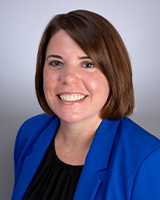
Dr. Angela McGowan-Kirsch is an Associate Professor of Communication at SUNY Fredonia, where she specializes in rhetoric, communication and leadership, and media literacy. She chairs the American Democracy Project Committee, leads the Civic Discourse General Education Competency Task Force, and coordinates the Leadership Studies minor. In these roles, she advances initiatives that promote informed, responsible, and inclusive civic participation.
Her scholarship explores college students’ democratic engagement, public discourse, and strategies for fostering civil dialogue. She is the editor of Encouraging College Students’ Democratic Engagement in an Era of Political Polarization (2025) and has published extensively on media literacy, open pedagogy, and collaborative student-centered learning.
Dr. McGowan-Kirsch teaches courses in political communication, civic engagement, and leadership, guiding students to apply classroom learning in their communities. She also supervises student internships in Communication, Leadership Studies, and interdisciplinary programs, promoting partnerships between students and local nonprofits to create real-world civic learning opportunities.
She is a 2023 recipient of the SUNY Chancellor’s Award for Excellence in Teaching and integrates innovative, student-centered approaches to foster civic skills and community partnerships. Through her research, teaching, and service, Dr. McGowan-Kirsch advances civic education, strengthening college students’ democratic engagement, and promoting civil discourse online and in-person.
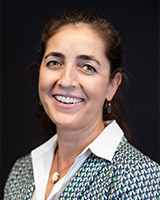
Ş. İlgü Özler is the founding Director of the SUNY Global Engagement Program in NYC and a Professor of Political Science and International Relations at SUNY New Paltz. Her research focuses on civic engagement. She did research in Turkey, Spain, Mexico and Chile on political participation of civil society. Her research also focuses on human rights and global governance. She was a Fulbright scholar at Universidad Autonoma de Madrid in 2022 and the recipient of a Charles E. Scheidt Faculty Fellowship in Atrocity Prevention 2022-2023. For 20 years, she taught a course on the United Nations where she organized and participated in over 600 briefings for her students at the United Nations. She engages her students in applied work in global affairs through the SUNY Global Engagement Program in NYC in affiliation with over 60 different organizations. She is the founder of Mid-Hudson Valley local chapters of Amnesty International USA (served as coordinator 2011-2017) and United Nations Association (served as president 2013-2017). She served on the Board of Directors of Amnesty USA (2018-2021 and 2023-2026). Özler received her Ph.D. in Political Science from University of California, Los Angeles (2003).

Professor Nirav S. Patel is a trained natural and social scientist with a PhD from Cornell University and possesses expertise in human dimensions and dynamics of Coupled Natural and Human Systems (CNH). Dr. Patel has implemented, directed, and assessed an experiential program that employs a problem-based learning model that engages students to work as groups to find localized solutions to global problems. He creates community engagement to bridge differences between disparate ideas resulting in a novel synthesis by incorporating human capital with sustainability which leads to resilient communities engaged in local natural resource management action(s). He has developed a novel course at Binghamton University which utilizes experiential learning to teach civic engagement that occurs at the confluence of Food-Energy-Water (FEW) nexus and global health, nature of place and people, and urban ecology in the Anthropocene. He piloted a health-based community initiative for students to research and identify innovative solutions by working with health clinics in the area focusing on Broome, Tioga, and Tompkins counties. His course exploring the nature of place and people and its larger role in environmental communications and behavioral change, students investigate how values, attitudes, social structure, and communication affect public perceptions of environmental risk. He has been successful in creating science-based community engagement in Broome County to engage in building collaboration for PFAS testing in food packaging linking consumer preferences and its effect on waste streams to ecological corridors. Dr Patel utilized state funding to augment neural diverse youth to work in a sustainable hydroponic lettuce growing facility that bolsters their economic well-being for local communities. Dr Patel is recipient of multiple fellowship awards as well as teaching excellence awards over the last decade.
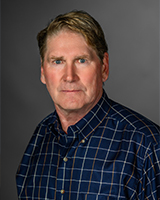
Dr. Sawyer is a Professor of Sociology at Hudson Valley Community College. He studied political sociology at Syracuse University and higher education at the University of Vermont. His focus has been on political socialization and he has published, through SUNY Press, Socialization to Civil Society: A Life History Study of Community Leaders. He has written other articles related to service learning and civic engagement at the Community College Times and other college publications. He has done numerous presentations on civic engagement, political socialization and public deliberation. At the college, he has worked to integrated civic discourse into his courses, his campus and in the broader Troy community using public deliberation.
He has also worked as a Department Chair at Hudson Valley Community College, the Director of the HVCC Center for Service Learning and Civic Engagement, the Assistant Director and Instructor of Project Renaissance at the University at Albany and as an Assistant Dean of Students at Siena College.

Professor Scanlon has led the expansion of deliberative dialogues at MCC including creating an annual deliberative dialogue series. MCC now hosts 2-3 dialogues per semester, covering a range of complex local, national, and global problems. This work also includes developing issue guides to expand local and globally-oriented dialogues. Professor Scanlon began training students to moderate dialogues to further the long-term goal of building a culture of deliberation and ensuring dialogues are student-centered and contributing to developing crucial life skills. He developed other civic opportunities by expanding the number of town halls and panel discussions dedicated to issues and civic-related themes, e.g., convening an annual Constitution Day town hall. Partnering with faculty in Visual and Performing Arts, Professor Scanlon and his colleagues guided political science and photography students in their research and photographic documentation of major social justice figures and movements from the region, thus creating a digital humanities project highlighting the intersections of civic engagement and creative placemaking. Professor Scanlon twice participated in Collaborative Online International Learning (COIL) projects with classes at Universidad Simón Bolívar in Venezuela. This exchange required students to engage in intercultural communication, collaboration, and collective problem-solving. The experience underscored what is required of people living in a diverse democratic society. Before his doctoral degree, he was an AmeriCorps environmental educator. He partnered with community organizations, local governments, and K-12 schools to provide education about our obligation to safeguard groundwater supplies. Dr. Jacobs, MCC’s Dean of Humanities and Social Sciences, says, “I do not know of another employee who has done more to advance the ideals of community enrichment through civic engagement and discourse at our institution.”

Mr. Suarez promotes civic engagement and civil discourse to students, faculty, staff, and community partners at Cortland and beyond. In collaboration with SUNY colleagues, community groups, and national organizations, he creates opportunities for students to become involved in citizenship activities, such as voter education campaigns and mutually beneficial applied learning projects in the community. Mr. Suarez collaborates extensively with colleagues across SUNY to share and advance best practices in civic engagement and applied learning by co-chairing the SUNY+ Team, a community of practice that designs and conducts events such as participatory Constitution Day events. Mr. Suarez helps faculty incorporate democracy engagement into their academic coursework by providing professional development programming and mentoring. In 2018, he created and sourced funding for the Cortland Applied Learning Practitioners (CALP) Fellows program to support cohorts of faculty as they incorporate democracy engagement content and activities into their teaching. He helps student groups develop and conduct quality-of-life projects with not-for-profit and government agencies as a way for students to learn how to apply their skills in democracy engagement contexts. He also supports scholarship as a founding co-editor of the Journal of Student Engagement, an open-source, peer-reviewed online publication with a section dedicated to the scholarship of democracy engagement and civic readiness. Through his own service to the community, Mr. Suarez embodies civic engagement and civil discourse. He is a founding board member of the Cortland Cupboard, he serves as a poll worker during elections and has served on community agency boards of directors, such as for the Seven Valleys Health Coalition. SUNY Cortland Assistant Vice Provost for Student Achievement Mary Schlarb says Mr. Suarez “demonstrates the civic-readiness skills he works to foster in all of us through his keen listening skills, openness to different viewpoints, and ability to facilitate respectful dialogue around difficult topics.”
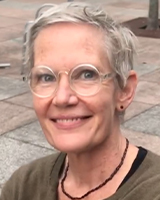
A Kant scholar, Jennifer Uleman has taught philosophy for over thirty years. In the classroom, she emphasizes sustained, face-to-face, real-time dialogue, even and especially when working with politically charged topics. She is deeply concerned about the decline of such dialogue outside (and even within) colleges and universities, a decline accelerated by the pandemic and exacerbated by social media, gaming culture, AI, misinformation, and fears of censure.
Professor Uleman recently hosted an intergenerational dialogue on political engagement for Purchase students and retirees at Broadview Senior Living Community, and has a long history of organizing public panels and discussions. She speaks publicly on culture and politics, both off campus and on, and has published op-eds and other comments in Art Forum, local papers, and online publications.
At Purchase, Professor Uleman has been deeply involved in General Education, leading college-wide revision and implementation efforts, chairing programs and departments that contribute heavily, and teaching a range of General Education courses herself.
Her current scholarly work seeks to uncover Kantian resources for thinking about collective responsibility in Kant’s short, if notorious, discussion of “bloodguilt.”
An Associate Professor of Philosophy and Critical Thought, Professor Uleman is also currently one of Purchase’s two Faculty Pedagogy Fellows, and chair of its program in Law and Justice Studies.
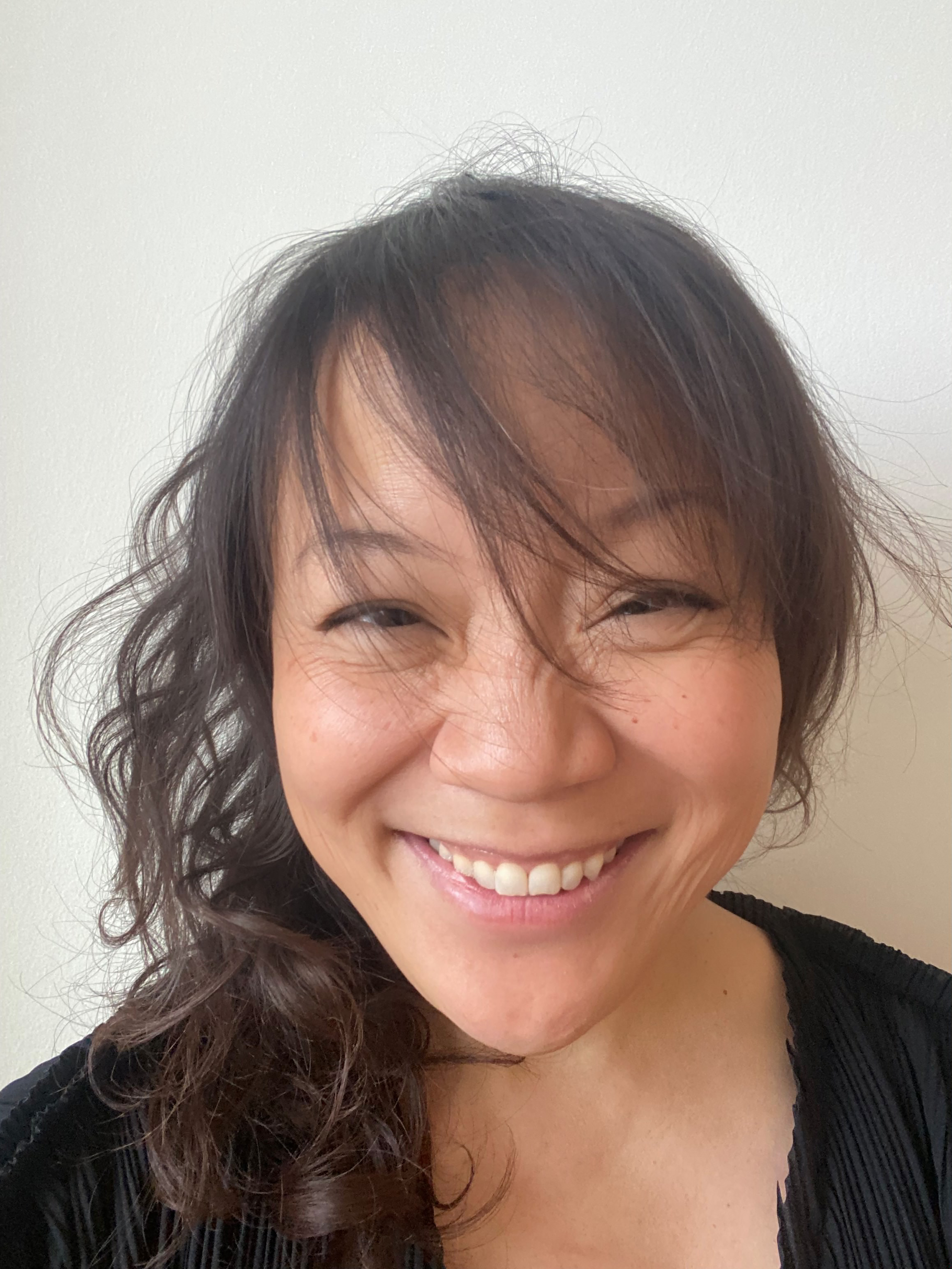
An Assistant Professor in Landscape Architecture at SUNY ESF, Professor Yang is focused on increasing community capacity to imagine, design, and build public spaces. Her work on projects such as the LA County Parks Needs Assessment, the Our County Sustainability Plan, and the Upper LA River Plan, have brought attention, funding, and green havens to neglected communities.
Professor Yang’s pedagogy centers the values and patterns found in our surrounding environment as the basis to understand our own interconnectedness and create sustainable change. Civic experience in the classroom is treated as both a subject and a process. As the University of Oregon Spatial Justice Fellow, her design studio won the 2023 American Society of Landscape Architecture National Honor Prize for their work responding to the mental, physical, and emotional experience of houselessness.
Her civil-engagement-infused- approach has been presented at multiple national conferences and has received the Azure Award for Urban Design Vision, the Southern California ASLA Merit Award, and the National ASLA Honor Award.
Amy Werbel is Professor of the History of Art at the State University of New York-Fashion Institute of Technology. For the past twenty years, her research has concentrated on censorship at the intersections of law and culture, and particularly in relationship to freedom of artistic expression. Her most recent book is Lust on Trial: Censorship and the Rise of American Obscenity in the Age of Anthony Comstock (Columbia University Press, 2018). Professor Werbel has lectured nationally and internationally on the damaging impact of censorship on pluralism and democracy, including during two appointments as a Fulbright Scholar to China (2011-2012) and to the United Kingdom (2019-2020). She was honored to receive the 2018-2019 State University of New York Chancellor's Award for Excellence in Scholarship. In 2022, Professor Werbel was appointed a Fellow at the University of California National Center for Free Speech and Civic Engagement. In 2024, she was appointed a SUNY Civic Education and Engagement and Civil Discourse Fellow. She currently also co-chairs Public Art Dialogue, an international organization devoted to studying and promoting art in civic spaces.