

The SUNY General Education Framework introduced the knowledge and skills area of Diversity, Equity, Inclusion, and Social Justice (DEISJ) as a required category for all undergraduate degree-seeking students. In the SUNY Board of Trustees resolution that adopted the SUNY General Education Framework, there was a commitment that SUNY System Administration would work with campuses to ensure faculty have the training and resources to support the teaching and learning needs in the DEISJ category. To this end, faculty from across SUNY campuses were selected as DEISJ Fellows to serve as faculty-to-faculty support for those developing and teaching curricula that meet the DEISJ student learning outcomes. The DEISJ Fellows will be providing multiple kinds of support for SUNY faculty and staff.
SUNY Chancellor King Announces Fourth Cohort of Diversity, Equity, Inclusion, and Social Justice Fellows
Current SUNY Diversity, Equity, Inclusion, and Social Justice Fellows:

As a trained civil engineer, Dr. Asif Ahmed’s research lies at the intersection of geotechnical engineering, remote sensing, artificial intelligence, and engineering education. He has been widely involved in topics such as soil instrumentation, geo-infrastructure performance monitoring, climate-informed hazard assessment, and the integration of advanced data analytics in geotechnical applications. In recent years, Dr. Ahmed has been involved in research that leverages remote sensing data and AI-driven platforms in natural hazard related issues. As a committed educator, he is integrating DEISJ-related content into technical courses through case studies and project-based learning activities that examine the societal impacts of engineering decisions. He is also motivated by a desire to prepare future engineers who are not only technically capable but also ethically responsible, inclusive, and aware of the societal impacts of their work. Beyond academia, Dr. Ahmed contributes to the profession through leadership roles in ASCE and ABET, and through extensive outreach with local schools, community colleges, and professional societies, advancing both technical innovation and inclusive engagement in engineering. He is a licensed professional engineer (PE) in the state of New York.

Dr. Jessica Best (she/her) is a Professor of English at SUNY Adirondack where she has over ten years of experience teaching Women's Literature, Queer Literature, Graphic Novels, and College Writing. She also teaches within the Accelerated Learning Program (ALP), and was a campus and regional lead in the SUNY Developmental English Learning Community which expanded ALP programs across all SUNY community college campuses. She embeds diversity, equity, inclusion, and social justice into all of her curriculum. Dr. Best has served as the Diversity Initiatives Coordinator for SUNY Adirondack since January 2025, and she has chaired the campus's Diversity Committee for over three years, leading all students, campus departments, and offices in fostering community and belonging. This is her second year serving as a SUNY DEISJ Fellow.
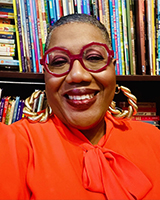
Dr. Tokeya C. Graham, EdD (she/her) is a Professor of English in the English and Philosophy Department at Monroe Community College. She teaches composition, literature, and creative writing courses, including Literature of the Black Experience. Her teaching, scholarship, service, and leadership have been grounded in a sustained commitment to equity, belonging, and inclusive educational spaces.
Dr. Graham serves as Co-Chair of the African American Affinity Group (3AG) and as a college-wide mentor for historically excluded faculty. Her research includes the retention and experiences of Black faculty in higher education, with broader interests in culturally responsive pedagogy, racial equity, and identity.
A multi-award-winning community steward, Dr. Graham is founder and CEO of Soulstainable Living LLC, an education, equity, and leadership consultancy. She is also the author of two books: The Black Healing Project and A Yellow Ribbon in the Sky for Ronald.
Dr. Graham earned her EdD in Educational Leadership–Higher Education and MA in English from the University of Rochester, BS in English–Creative Writing from SUNY Brockport, and AAS in Human Services from Monroe Community College. She also holds a Diversity and Inclusion Certificate from Cornell University.

Jaime Hartless is an Assistant Professor of Sociology at Farmingdale State College, where she serves as the Coordinator of the Women, Gender, & Sexuality Studies Minor and IRB Chair.
Dr. Hartless’ research is located at the intersection of gender, sexuality, and social movements. Her current book project explores the politics of allyship and intersectionality in LGBTQ+ and feminist movements. She has also published articles on the position of men within feminism, the negotiation of straight people in LGBTQ+ bars, the exclusion of queer woman in LGBTQ+ social spaces, and the value of using horror to teach about sexualities. She recently co-authored edited volume chapters examining how the 'witch' illuminates our changing understandings of gender and how queer ghost-hunting can be an innovative form of archiving. Her ongoing research projects explore activist attempts to limit the presence of police at Pride events, the consumption of drag content by queer women, and the pedagogical utility of using Google Maps to help students understand inequality.
Her classes include DEISJ-designated units of Introduction to Sociology, Introduction to LGBTQ+ Studies, and Sex, Gender, & Sexuality, as well as Sociological Theory. She recently created a Sociology of Horror class that uses the genre to critique inequality.

David Z. Jacome, Ed.D., MBA, M.S., is a Lecturer and Accounting Coordinator in the Department of Accounting, Economics, and Finance at SUNY Brockport's School of Business and Management, where he teaches all levels of accounting at both the undergraduate and graduate level, advises the Accounting Society, and leads the CASH/VITA free tax preparation program, delivering vital financial services to underserved families across the greater Rochester community. His doctoral research examined ethnic-racial diversity in STEM in higher education, and his teaching and scholarship center on dismantling barriers to the accounting profession, building inclusive pathways for first-generation and underrepresented students, and leveraging AI and no-code analytics to democratize access to high-demand skills. A first-generation scholar of Italian and Ecuadorian heritage, Dr. Jacome brings more than fifteen years of teaching experience across accounting, astronomy, business, economics, engineering sciences, data science and analytics, mathematics and physics, along with an interdisciplinary perspective shaped by earlier plasma physics research affiliated with MIT and Princeton. An active Rotarian, NYCPA Campus Liaison, and founder of a nonprofit youth tennis organization, he is committed to advancing diversity, equity, inclusion, and social justice in business education across the SUNY system.
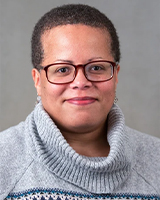
Dr. Saundra Liggins is an associate professor of English at the State University of New York at Fredonia. Her teaching interests include African American literature, film, and culture. Among other goals, these courses engage students in critical analyses of race, gender, power, privilege, and identity. Her scholarship and professional presentations include work on teaching racial equity, DEISJ General Education requirements, African American literature, Black history, and interdisciplinary approaches to social justice education. She served as Interim Chief Diversity Officer and Title IX Coordinator at SUNY Fredonia from 2019 to 2021. From 2022–2024, she served on the SUNY Equity, Inclusion, and Diversity Committee.
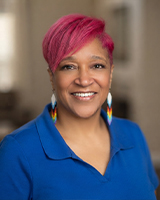
Dr. Sonja Ann (Sam) Miller is a full-time Instructor of Psychology at Hudson Valley Community College with over three decades of teaching and clinical experience. She holds a Ph.D. in Psychopathology and an M.S. in Clinical Psychology from Aix-Marseille University, France, and a B.A. in Psychology (Neuroscience) from Davidson College.
Dr. Miller's academic career spans appointments at institutions including the University at Albany, Rensselaer Polytechnic Institute, Siena College, and the College of Saint Rose. A recognized subject matter expert and Open Educational Resources (OER) author for Lumen Learning, she specializes in health psychology, abnormal psychology, lifespan development, and equity-centered pedagogy. Her clinical background encompasses diverse healthcare settings, including skilled nursing facilities, palliative care, infectious diseases, and addiction treatment. Grounded in a comprehensive biopsychosocial and biopsychocultural framework, Dr. Miller's work emphasizes health equity, trauma-informed care, and the critical intersection of social determinants and physical well-being.
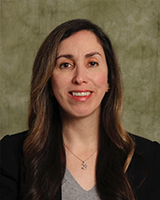
Dr. Lubna Omar is an instructor in the Department of Anthropology at Binghamton University. As a zooarchaeologist specializing in Southwest Asian archaeology, her research examines human-animal relations, ancient foodways, and the development of early urban economies in Southwest Asia. Her work strongly emphasizes cultural heritage preservation in conflict zones and the imperative to decolonize archaeological practices in the region. Beyond academia, she serves as a board member for SIMAT, a non-profit organization dedicated to preserving cultural heritage in Syria. Selected as a 2026–2027 Diversity, Equity, Inclusion, and Social Justice (DEISJ) Fellow, Dr. Omar focuses on advancing inclusive pedagogy, fostering equitable educational practices, and embedding social justice frameworks into higher education curricula to uplift underrepresented perspectives.
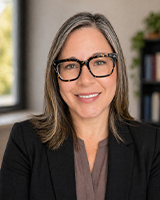
Jodi Scondras is the Director of Human Service Careers and Education at Genesee Community College, where she has worked since 2009. Her areas of expertise include curriculum design and assessment, faculty support, inclusive and accessible teaching practices, and evidence-based instructional design.
Jodi’s professional interests center on accessible and equitable pedagogy, as well as the design of learning experiences that support students with diverse abilities and experiences. Drawing on her background in special education, she incorporates Universal Design for Learning, the Cognitive Theory of Multimedia Learning, and reflective teaching practices into her approach to curriculum and instruction.
At Genesee, Jodi has led and shaped campus-wide curriculum initiatives, program assessment, faculty learning, and implementation of the SUNY General Education Framework. She has also contributed to SUNY system-level curriculum and transfer initiatives and regularly supports faculty across disciplines.
Past SUNY DEISJ Fellows:
Dr. Jessica Best (she/her) is a Professor of English at SUNY Adirondack where she has over ten years of experience teaching Women's Literature, Queer Literature, Graphic Novels, and College Writing. She also teaches within the Accelerated Learning Program (ALP), and was a participant in the SUNY Developmental English Learning Community which expanded ALP programs across all SUNY community college campuses. She embeds diversity, equity, inclusion, and social justice into all of her curriculum. Dr. Best has served as the Diversity Initiatives Coordinator for SUNY Adirondack since January 2025, and she has chaired the campus's Diversity Committee for over three years, leading all students, campus departments, and offices in fostering community and belonging.
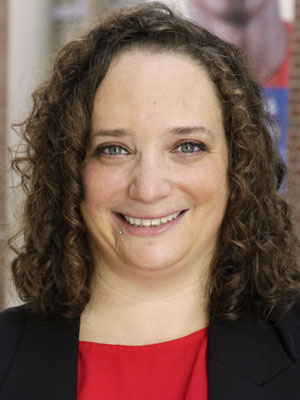
Chloe Diamond-Lenow (she/they) is an Assistant Professor of Women's and Gender Study at SUNY Oneonta. They specialize in feminist and queer theory, postcolonial animal studies, affect theory, cultural studies, and theories of intersectionality. Some of the classes they teach include “Queer Theory,” “Trans and Women of Color Feminisms,” “Trans Lives and Constructs of Conformity,” and “Gender, Power, and Difference.”
Dr. Diamond-Lenow’s research analyzes the politics of race, gender, sex, and species in U.S. empire and the politics of feminist and queer pedagogies and epistemologies. Her work has been published in the Journal of Intercultural Studies, Race and Yoga, The Routledge Companion to Gender and Affect, and the Global Journal of Animal Law. She is currently working on her book manuscript "Boundary Affects: Race, Gender, Sex, and Species in the "War on Terror."
Her service work forefronts intersectional and coalitional approaches. She is co-chair of the University Council on Diversity's Inclusive Excellence Committee and the Queer/Trans Affinity Group at SUNY Oneonta. She is also co-organizer of "Broadening Horizons: Learning and Healing with Black Feminisms for Inclusive Futures."
Dr. Diamond-Lenow received their PhD in Feminist Studies from the University of California Santa Barbara, their MSc in Gender Studies from the London School of Economics and Political Science, and their BA in the Study of Women and Gender from Smith College.
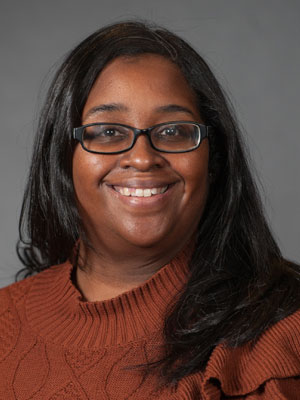
Carla J. DuBose-Simons is an Assistant Professor of History in the Humanities Department at Westchester Community College. Her teaching focuses on colonial and 20th Century American and African American history. Her research interests include New York City history, African American history, and the history of black community formation. She is the author of "Fighting Against Jim Crow Hiring" in The Economic Civil Rights Movement: African Americans and the Struggle for Economic Power and "Movin' on Up: African Americans in the South Bronx in the 1940s" in the Fall 2014 issue of New York History. She serves as the faculty advisor for the Black Student Union, represents her department in the Faculty Senate, has coordinated assessment of Student Learning Outcomes for American History classes at the college, and participated in implementing the college’s General Education program among other duties. Dr. DuBose-Simons is Assistant Editor of the Ethnic Students Review, University of California Press and co-chaired the inaugural Teaching History Writing Conference in March 2021. Dr DuBose-Simons was recognized with a SUNY Chancellor's Award for Excellence in Faculty Service for the 2023-2024 academic year.
Carla DuBose-Simons earned her doctorate degree in History from The Graduate Center of the City University of New York and her Bachelor of Arts degree in Politics and Africana Studies from the College of Arts and Sciences of New York University.

Jordan Bell is an Assistant Professor of English in Dutchess Community College's Department of English and Humanities. Dr. Bell's teaching focuses on developing students' racial literacy. He has two primary research strands. One research strand focuses on complicating and furthering the way we think about and enact racial literacy, such as in "Diggin in the Racial Literacy Crates" which was published in Equity & Excellence in Education; and his second research strand focuses on creating Black educational spaces that are designed to center, support, celebrate, and heal Black students, which was discussed in "Black Lives Matter and the Making of Black Educational Spaces" which was published in Comparative Education Review.
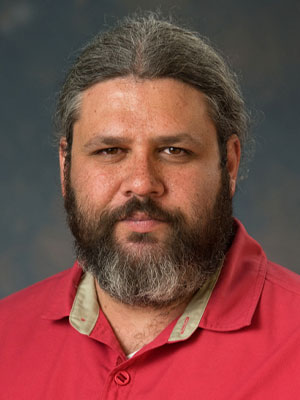
Michael E. Chaness is a Visiting Assistant Professor of Anthropology and the Director of Native American Studies at SUNY Oswego. His teaching focuses on Native American history and culture (NAS100: Introduction to Native American Studies, NAS340: Native American Women, NAS350: Contemporary Native America, ANT375: North American Indians) with particular emphasis on the moral and philosophical systems of the Haudenosaunee. His research examines the intersections (blood, land, genocide, theology, art and aesthetics) between American Indian and American Jewish communities. His service is anchored by cultivating long lasting relationships between the students, faculty, and staff of SUNY Oswego and the men, women, and children of the Onondaga Nation. In addition to authoring the Land Acknowledgement Statement, Dr. Chaness has previously served as an Accessibility Fellow, and will act as co-chair for the "Task Force on Haudenosaunee Naming." Additionally, Dr. Chaness serves on a number of social justice related committees and workgroups - CLAS DEI, Workgroup on Accessibility Practices, Flags of Nations, Campus Environmental Advisory.
Dr. Chaness graduated from the University of Missouri-Columbia with a B.A. in religious studies before matriculating to Syracuse University where he earned an M.A., M.Phil, and Ph.D. in religion.
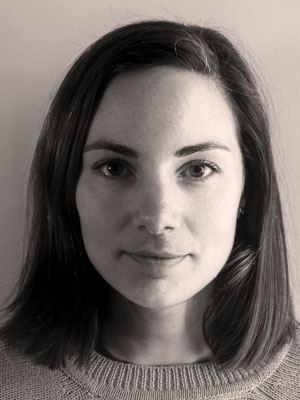
Kim Coleman is an Assistant Professor in the Center for Earth and Environmental Science at SUNY Plattsburgh. Dr. Coleman's teaching and research focus on human dimensions of natural resources, and she offers courses in environmental justice, geography of recreation and tourism, and environmental planning. Current research projects include a Lake Champlain Sea Grant award to explore strategies to diversify environmental education programs, and a Northeastern State Research Cooperative award to explore the social impacts of mountain biking in the Northern Forest Region. Her service focuses on social justice and sustainability initiatives, including participating in the Plattsburgh Next strategic planning efforts and serving on her local conservation commission. She is also passionate about diversifying the sport of cycling, and co-founded a non-profit along with her husband, called Green Mountain Off-Road, Inc., to support women and gender-diverse folks in bike racing.
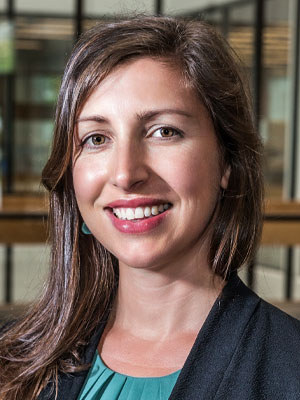
Lauren Diamond-Brown is an Assistant Professor in the Sociology and Criminal Justice Department at SUNY Potsdam. Lauren teaches core courses in the department as well as elective and general education courses focused on health and illness, diversity, and social inequality. Some of her courses include Reproductive Justice, Introduction to Women’s and Gender Studies, Speaking about Diversity: Women and The Body, and Speaking about Diversity: All the ISMs. Her past research examines power dynamics in the context of childbirth, and she is currently working on a project to study people’s experiences of perinatal care in St. Lawrence County and Akwesasne. At SUNY Potsdam Lauren is Chair of the Diversity Attribute Review Committee, a member of the Culture or Respect leadership team to reduce sexual violence, and a member of the North Country Birth Coalition which is a grassroots group of advocates working for reproductive justice in her community.
Lauren received her Ph.D. in Sociology from Boston College and her B.A. in the Social Sciences from Chapman University.

Jonathan Dirlam is an assistant professor in the Sociology department at the University at Albany where he teaches courses on Juvenile Delinquency, Sociology of Law, and Quantitative Methods. Their research interests largely lie within the fields of criminology and health. Current research projects include an examination of structural determinants related to the police use of lethal force and an analysis on how early life factors can help explain cohort health differences. Their service includes acting as a Liaison for the UAlbany in the High School Program, being a member of the Sociology Department Diversity and Inclusion Committee, and serving as a Community Reengagement Mentor for undergraduate students. They are also a founding member of a BILPOC Faculty Advancement Group established at UAlbany that seeks to increase the retention and promotion of BILPOC faculty by providing resources, support, and a strong community to faculty of color.
Jonathan Dirlam received Bachelor's Degrees in Sociology and Economics from the University of California San Diego and received their doctorate in Sociology from Ohio State University.

Naomi Edwards is an Associate Professor in the department of English at SUNY Suffolk County Community College. Her teaching focuses on multiethnic literature and composition, and she recently developed a new course for Suffolk, "Multiethnic Literature of the United States," which meets the new SUNY DEISJ learning outcomes and will run for the first time this fall. Her research focuses on contemporary Asian American literature at the intersections of racial melancholia, trauma studies, and gender and sexuality studies. Her forthcoming article, "Race in the Classroom and the Problem of Hope," will appear in Race in the Multiethnic Literature Classroom (eds. Gary Totten and Cristina Stanciu, University of Illinois Press). Dr. Edwards's service is both student- and DEISJ-centered, including advising the Asian Culture Appreciation Club and serving on her campus’s Committee on Diversity and Inclusion, for which she recently helped develop a Student Social Justice Award to recognize students’ outstanding work in social justice education and action in our communities.

Emily P. Estrada is an assistant professor in the department of sociology at the State University of New York at Oswego. Dr. Estrada teaches courses in race and immigration, including Boundaries of Whiteness and Contemporary U.S. Immigration Policy among others. Her research explores the cultural and institutional racialization of immigrants, focusing on the ways immigrants from Latin American countries are Othered through subtle discourses and processes. Her service work focuses on making her university and community more inclusive. She currently serves on SUNY Oswego's Women Advisory Board, her college's Diversity, Equity, and Inclusion committee and is a member of the Syracuse Immigrant and Refugee Defense Network (SIRDN).

Timothy W. Gerken is a Professor of Humanities at SUNY Morrisville and has been teaching writing at the college level for over 30 years. In addition to teaching a variety of writing courses from developmental writing to poetry writing workshops, he also served as Director of the Butcher Library gallery. Over the last 15 years, the gallery has supported the work of disabled, queer, and POC creators along with many local artists. His current writing focuses on metaphor, identity, and transformative practice. "Repo Fem," an essay from his manuscript The Body is a Mirage, was published in Antagonizing White Feminism: Intersectionality's Critique of Women's Studies and the Academy (2020). He has served as SUNY Morrisville's University Faculty Senator and Chair of the SUNY UFS Committee for Equity, Inclusivity, and Diversity. In 2015 he was awarded the SUNY Chancellor's Award for Excellence in Faculty Service, and in 2017 the SUNY Office of Diversity, Equity and Inclusion Award for Diversity, Inclusion, and Social Justice.
He received his BS in Personnel Management from Clarion University of PA, served three years as an officer in the US Army, and went on to earn an MS in English with HS teaching certification from Southern Connecticut State University, an MFA in Poetry Writing from Brooklyn College, and a PhD in Education from Fordham University.
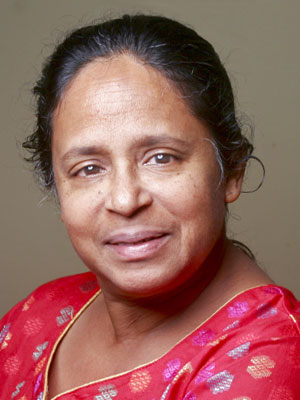
Himanee Gupta is a Full Professor in Empire State University's Department of Historical Studies, where she also serves as Academic Chair. Her teaching focuses on Asian American History, Hip Hop histories, and food security. Her research focuses on race and ethnicity, South Asian American Religions, Asian American history, Hip Hop Studies, and food security. Her 2023-24 service commitments include academic coordination of the Historical Studies' online courses and Empire State’s academic personnel committee. Outside of academia, she is an active farmer and participant in the Saratoga Farmers Market and Schenectady Greenmarket as well as a member of the boards of the Ndakinna Native American Education and Cultural Center and The Weave News. She is author of Muncie, India(na): Middletown and Asian America. Diversity, equity, inclusion, and social justice is a focal point of Gupta’s courses on Hip Hop America: The Evolution of a Cultural Movement, African History & Culture, and many introductory and advanced courses in U.S. History.
Gupta holds a bachelor's degree in Journalism, an MA in American Studies, and Ph.D. in Political Science.
Jaime Hartless received her PhD in Sociology from the University of Virginia. She joined the Farmingdale State College Sociology & Anthropology Department as an Assistant Professor in 2020, where she currently serves as the Coordinator of the Women, Gender, & Sexuality Studies Minor and IRB Chair. Her research is located at the intersection of gender, sexuality, culture, and social movements. Her current book manuscript explores the politics of allyship and intersectionality in LGBTQ+ and feminist social movements. She has also published articles on the negotiation of straight people in LGBTQ+ bars, the exclusion of queer woman in LGBTQ+ social spaces, and teaching sexualities through horror. She recently co-authored edited volume chapters on what the figure of the 'witch' can teach us about our changing understandings of gender and how queer ghost-hunting can be an innovative form of archiving. She is currently working on multiple research projects, including an analysis of attempts to ban police at Pride events, a pedagogical assessment of a Google Mapping inequality project, and a digital ethnography of lesbian fans of Drag Race-related content. Her classes include DEISJ-designated units of Introduction to Sociology, Introduction to LGBTQ+ Studies, and Sex, Gender, & Sexuality, as well as Sociological Theory.
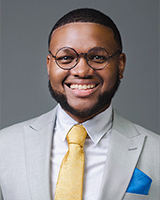
Dr. Shelton K. Johnson is an Assistant Professor of Black Studies at SUNY New Paltz whose research, teaching, and service advance transformative justice in education. As a critical scholar of educational leadership, culturally responsive pedagogy, and intersectional policy studies, and Black LGBTQ studies, Dr. Johnson’s work examines how systems of race, gender, sexuality, and geography shape educational access, belonging, and institutional power.
Rooted in the sociopolitical context of the U.S. South, some of his interdisciplinary research interrogates the lived experiences of Black and LGBTQ+ individuals in educational and civic life—particularly within rural and historically disinvested regions. His award-winning dissertation, Southern Je Ne Sais Quoi, offers an original theoretical and empirical contribution to the study of Black queer life, rural schooling, and structural exclusion in Alabama’s Black Belt. Dr. Johnson is recognized for his contributions to teacher and leader preparation, anti-racist curriculum design, and educational equity research. He has worked extensively with preK–20 educators, policy leaders, and institutions to develop inclusive leadership frameworks, improve school climate, and support justice-centered professional learning. His scholarship informs not only academic discourse but also the everyday work of building schools and systems that affirm and serve all students.
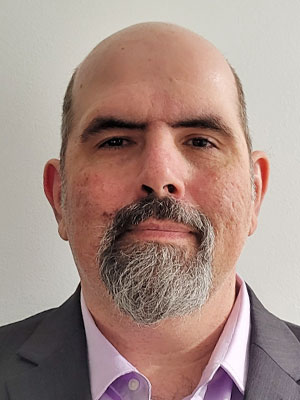
Arnaud Lambert is an associate professor in the Arts, Humanities, and Social Sciences Division at Jamestown Community College. His teaching focuses on anthropology, sociology, and indigenous studies. This Fall, he plans on teaching introductory sociology, introductory cultural anthropology, comparative religion, and a globally-focused course on marriage and the family. Professor Lambert's research delves into the intersection of art, archaeology and religion, focusing primarily on the study of Olmec-style rock art in Preclassic Mesoamerican contexts. In addition, Dr. Lambert has worked to incorporate and assess DEISJ principles in the core courses of anthropology and sociology in particular, and the liberal arts in general. This work culminated in the creation of four textbooks in the areas of cultural anthropology, marriage and the family, and indigenous religions. He has also facilitated race and ethnicity student conversation circles and has received training in trauma-informed, culturally-responsive and anti-racist pedagogies. He is currently serving as a DEI transition consultant for Jamestown Community College.
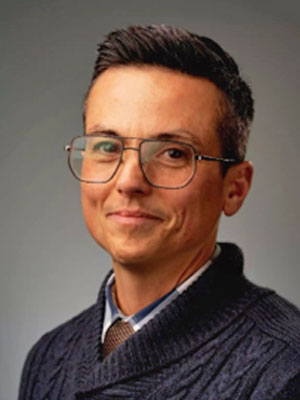
Milo Obourn is Chair of Women & Gender Studies, Professor of English, and Coordinator for the Disability Studies Minor at SUNY Brockport. They teach courses in gender, disability, and literary studies with a focus on social justice movements and intersectionality including "Introduction to Intersectional Disability Studies," "Gender, Race, Class," and "Trans, Racial, and Disability Justice." Their research examines the paradox of social identity as a tool for liberation and of oppressive power. Recent scholarship includes Disabled Futures: A Framework for Radical Inclusion (2020; Temple UP), and editorial work on the DSQ's special issue "Disability and Sex Work" (2022). Dr. Obourn’s service focuses on equity, access, and community building. They currently serve on Brockport’s Committee on Accessibility, Indigenous Peoples’ Day and Indigenous Land Acknowledgement Committees, University Senate EDI Committee, and Restorative Champions team; and as a board member for the Center for Dispute Settlement and the Opening Doors Institute.
Milo Obourn received their PhD from New York University in English with a focus on multicultural literatures of the United States and their BA from Tufts University with majors in English and French.

Jessica N. Pabón-Colón (she/ella) is an Associate Professor in the department of Women's, Gender, and Sexuality Studies at SUNY New Paltz.
Her teaching focuses on queer feminisms of color and she practices an emancipatory pedagogy. She teaches courses such as Latina Feminisms, Feminist Perspectives on Decolonization, and Gender and Sexuality in Hip Hop. Her research focuses on how the historically underrepresented and disenfranchised articulate claims to identity, feelings of belonging, resistance to oppression, and celebrations of liberation through performance (on and off stage). Her first book, Graffiti Grrlz (NYU Press, 2018) is the first academic study on women's participation within Hip Hop graffiti art subculture. She is currently working on an edited anthology on Puerto Rican Feminisms. Her service focuses on creating spaces of belonging for those minoritized within higher education and has manifested in the creation of such spaces including the People of Color Network for Faculty and Staff (founded in 2016) and Rivera House, an LGBTQIA+ living learning community for students (founded 2015).

Dr. Lorna Perez is an associate professor of English at Buffalo State University where she teaches courses in Latinx/e literature, US ethnic minority literatures, women's literature, contemporary literature, 20th century American literature, and popular culture/cultural studies. She specializes in Latina literature, though her research interests also include ethnic literatures of the United States, postcolonialism, diaspora, feminism, borderland theory, cultural studies and the literatures of the global south. In addition to her work in the English Department, Dr. Perez is affiliate faculty with Africana Studies and is core faculty in Women, Gender, and Sexuality Studies. She is also core faculty in the Honors Program, and serves on the Honors Board.
Her critical work has appeared in numerous encyclopedias, and journals including Chicana/Latina Studies, Ethnic Studies Review, Centro Journal and others. Her work "Out of Time: Resisting the Nation in One Hundred Years of Solitude" appears in the newly published Palgrave Handbook of Magical Realism in the Twenty-First Century. Her creative work has been published in elimae, The Mississippi Review, Label me Latina, BlazeVox18, and The Buffalo News.
In the summer of 2014, she was elected interim Chair of the English Department for academic year 2014-2015. She was the recipient of the Muriel A. Howard Presidential Award for the Promotion of Equity and Campus Diversity for 2017-2018 and the EOP Faculty Merit Award for 2019.
Beyond the campus, Dr. Perez served as the guest editor for the Label me Latina/o Special Summer 2020 issue (Un)Natural Disasters: Sites of Resistance. In Fall of 2020, she was appointed the permanent Special Issues Editor for the journal. She most recently co-edited the summer issue on Latinx Comics and Graphic Novels with Frederick Luis Aldama.
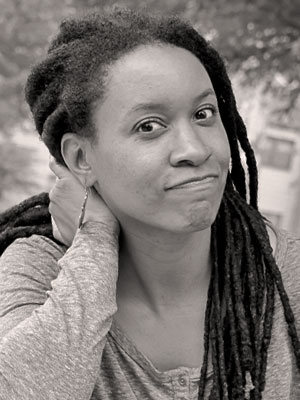
Krystal M. Perkins is an associate professor of psychology and a contributing faculty member in the interdisciplinary program of Global Black Studies at SUNY Purchase. Her teaching primarily involves facilitating learning through collaborative learning, lived experience, and critical thinking about social context and systems of oppression through courses like Cultural Psychology, The Psychology of Stereotyping, Prejudice, and Discrimination, and The Psychology of Stigma. Her research focuses on minority/tized subjectivities, as complex and multifaceted, negotiating histories-nation-ideologies-identities. The research also considers constructions of and discursive contexts of racialized, nationalist, and diversity discourses, critical environmental justice, and the intersection of Black radical/liberation movements and Black identity. She has participated/co-organized/facilitated/built spaces for service that validates the experiences of minoritized others and interrupts intersecting systems of oppression. Some of her service includes memberships on the PRODiG Committee, Opportunity Gap Task Force, Decolonizing Psychology Working Group, and Principal Investigator (NIH) to the Purchase College MARC U*STAR Honors Program: Building the Academic, Social and Economic Capital of Underrepresented STEM Scholars.
She received her PhD in Social/Personality Psychology from the Graduate Center, City University of New York.
Dr. Stephen Santa-Ramirez (he/him) is an associate professor of higher education within the Department of Educational Leadership and Policy at the University at Buffalo and has worked in higher education administration, including Multicultural and LGBTQA2S+ Affairs, Residential Life, and Migrant Student Services at various universities across the United States. He is a scholar-advocate and a first-generation college graduate whose personal and professional experiences have played formative roles in developing his research agenda, which broadly investigates the ideological, historical, and structural inequalities that impact minoritized and underrepresented communities. Particularly, his work and community involvement include investigating campus racial climate, transitions and belongingness of first-generation students, college student activism and resistance, and the various ways race, ethnicity, im/migration status, and law and policy inform the educational experiences of college students who are immigrants. Dr. Santa-Ramirez has published dozens of academic articles and has been recognized nationally for his work, including a National Academy of Education/Spencer Foundation Postdoctoral Fellow, a SUNY/University at Buffalo Exceptional Scholar–Young Investigator, an ACPA—College Student Educators International Emerging Scholar and Diamond Honoree, and a recipient of the ACPA Latinx Network Community Advancement and Service Award.
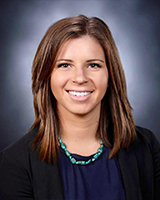
Danica Savonick is an Associate Professor of English at SUNY Cortland. Her research and teaching focus on multicultural and African American literature, women writers, feminist pedagogy, and digital humanities. She is the author of Open Admissions: The Poetics and Pedagogy of Toni Cade Bambara, June Jordan, Audre Lorde, and Adrienne Rich in the Era of Free College (Duke University Press, 2024). Her current project focuses on the radical writers and artists who taught at the experimental Livingston College (part of Rutgers University) in the 1970s. Her research has appeared in MELUS, American Literature, Modern Fiction Studies, Radical Teacher, Keywords for Digital Pedagogy in the Humanities, Digital Humanities Quarterly, and Hybrid Pedagogy as well as Public Books and The Chronicle of Higher Ed. She is an editor of The Journal of Interactive Technology and Pedagogy and Reviews in DH.
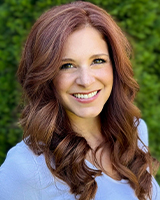
Simone Sellstrom is an Assistant Professor and Department Chair of Communication, Media Arts, English Literature, Theater, and Philosophy at Jamestown Community College, where she has taught for more than 14 years. A communication scholar with a Master’s degree from the University of Arkansas, Simone specializes in social justice rhetoric and the intersections of identity, communication, and equity.
Her teaching philosophy is deeply influenced by Barbara J. Love’s framework of developing a liberatory consciousness, which guides her in preparing students to analyze issues of equity and social justice and to act in ways that transform society. In her classroom, she integrates DEISJ perspectives across courses, encouraging students to see themselves as communicators with the power to shape culture and community. Her innovative approaches include weaving current events, technology, and experiential learning into her courses to foster engagement and inclusion.
With extensive experience in curriculum development, faculty mentoring, study abroad programs, and community college leadership, Simone brings expertise in social justice rhetoric, intercultural communication, and student-centered pedagogy to her teaching and leadership.
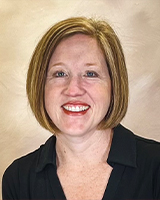
Amy Shore is a professor in the Department of Cinema & Screen Studies at the State University of New York at Oswego. She is author of Suffrage and the Silver Screen, a 2014 study of the films made by and about the American woman suffrage movement. She is currently working on a new book on silent filmmaker Nell Shipman that endeavors to go “beyond the pioneer myth” established around Shipman by feminist film historians to examine the colonial settler narratives of her films, stardom, and legacies. Dr. Shore is interim editor-in-chief for Gatherings: an intersectional, interdisciplinary feminist journal and board member of Adirondack Films, which runs the Lake Placid Film Festival every fall. Dr. Shore holds a BA in Spanish Literature from the University of Delaware and PhD in Cinema Studies from New York University.
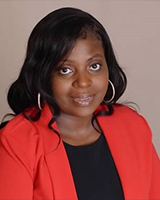
Shameika Williams, EdD, MPH, CLC is an Assistant Professor of Public Health and SEJI Fellow at SUNY Old Westbury and a SUNY Diversity, Equity, Inclusion, and Social Justice (DEISJ) Fellow. She is federally funded by the Centers for Medicare and Medicaid Services (CMS), supporting her work to advance maternal and child health equity.
Dr. Williams’ research explores the impact of carceral systems on maternal-child health, the role of structural racism in breastfeeding and birth outcomes, and the effectiveness of community baby showers as interventions for delivering maternal and child health education. She has led community-driven health equity initiatives at the NYC Department of Health and Mental Hygiene, Columbia University, and Northwell Health.
Previously, Dr. Williams served as a Faculty Fellow at the National Maternal Child Health Development Center through August 2025. Prior to her academic role, she worked as a Research Scientist at the NYC Department of Health and Mental Hygiene. She earned her Doctorate in Health Education from Columbia University, Teachers College.
A Certified Lactation Counselor, Community Breastfeeding Educator, and trained Community Health Worker, Dr. Williams specializes in community-centered interventions and is known for organizing community baby showers to support and educate expectant families.
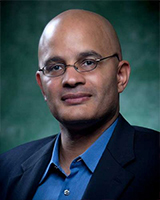
Leo Wilton is a Professor in the Department of Human Development at the State University of New York at Binghamton. He regularly teaches courses on the psychology of racism, Black child and adolescent development, Black families, and research methods. His research interests include health disparities and inequities (HIV prevention and care), Black psychological development and mental health, critical community-based participatory research, and mixed- and multi-methods research. His research engages the complexities of how socio-structural and –cultural contexts influence people's development and well-being within Black communities, with specific implications for developing culturally-informed systems of care.
As a recipient of the Chancellor's Award for Excellence in Teaching (and the Chancellor’s Award for Excellence in Scholarship and Creative Activities) in the State University of New York, he has substantially contributed to the teaching and research mission of academic excellence focused on diversity, equity, inclusion, and social justice. He has served as Principal Investigator (PI) or Co-Investigator on several National Institutes of Health (NIH)-funded longitudinal research studies. In recognition of his professional contributions, he is elected fellow of the American Psychological Association, Association for Psychological Science, Academy of Behavioral Medicine Research, and New York Academy of Medicine.