

Sustainability Faculty Fellows will focus on supporting faculty in the development and incorporation of sustainability in courses and curricula across a wide range of disciplines.
SUNY Chancellor King Announces Second Cohort of Sustainability Faculty Fellows
Current SUNY Sustainability Faculty Fellows:
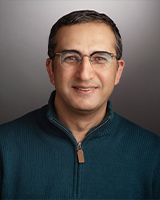
Ahmad Almomani is an Associate Professor of Mathematics at SUNY Geneseo, where he has been a faculty member since 2017. He earned his Ph.D. in Applied Mathematics from Clarkson University, specializing in derivative-free optimization. His areas of expertise include applied and computational mathematics, derivative-free optimization, sustainability optimization, numerical analysis, and partial differential equations.
Dr. Almomani’s research focuses on developing and applying optimization methods to real-world problems, particularly in sustainability, energy, environmental systems, and mathematical modeling. He is deeply committed to undergraduate research and mentoring, engaging students in interdisciplinary projects that connect mathematics with real-world challenges.
His contributions to teaching, mentoring, and sustainability have received several honors, including the SUNY Chancellor’s Award for Excellence in Teaching, the Sustainability Leadership Faculty Award, and the Drs. Carol and Michael Harter Endowment for Faculty Mentoring Award. He is passionate about integrating mathematics, computation, sustainability, and experiential learning to prepare students to address complex real-world challenges.

Dr. Michelle Eades-Baird is an Associate Professor of Science Education at SUNY Empire State University and a Fulbright Specialist with a Ph.D. in Curriculum, Instruction, and the Science of Learning. Her scholarship centers on environmental literacy, STEM identity development, disciplinary literacy, healthcare advocacy, and sociocultural factors influencing education internationally, with more than 20 peer-reviewed publications. She has spent nine years in teacher education assessment and accreditation work at SUNY Empire and serves on its Sustainability Committee. She recently served as Co-Principal Investigator on a SUNY Research Seed Grant (2025) supporting development and validation of a STEM Identity Inventory for grades 4–12. Her current research, Mapping Sustainable Choices, uses TIMSS 2023 data to examine environmental knowledge and behavior among American students. During her recent sabbatical, she redesigned her graduate course, Content Area Study: Science, around sustainability across biology, earth science, chemistry, and physics teacher preparation. Beyond her academic work, Dr. Eades-Baird brings a personal commitment to ethical consumerism, zero-waste and low-toxin living. As a hobby, she formulates COSMOS-compliant home and personal care products.

Jing Betty Feng, Ph.D., a former SUNY AI for Public Good Fellow, is a Professor of International Business at Farmingdale State College (SUNY). She earned her B.A. and MBA from Michigan State University and her Ph.D. from Georgia State University. Before transitioning to higher education, she worked in global supply chain management.
Dr. Feng’s scholarship examines social sustainability through responsible decision-making, stakeholder engagement, inclusive practices, and the social implications of technology. She leads a grant-funded, multidisciplinary initiative that develops learning modules on sustainable business and technology for small businesses and learners from marginalized communities. Dr. Feng has served in leadership roles on her department’s Social Impact Committee, the Academy of International Business Teaching & Education Shared Interest Group, and the AAPI Infinity Group, helping to build communities around shared educational and social goals.
Dr. Feng integrates sustainability into teaching both inside and outside the classroom through interdisciplinary Innovation Challenges, study abroad programs, and virtual service-learning initiatives. She has guided students from a wide range of disciplines in developing social ventures that address environmental and community challenges aligned with the United Nations Sustainable Development Goals.

Dr. Nick Henshue has a B.S. in Environmental Education, Master’s in Biology, and Ph.D. in Ecology. He currently looks for ways to utilize earthworm ecology together with Restoration and Soil Ecology to improve habitats in Western New York. Additionally, he is the Director of Undergraduate Studies for the Department of Environment and Sustainability at the University at Buffalo. Nick’s research interests include restoration and urban ecology, earthworms, science outreach, and helping teachers teach amazing science.
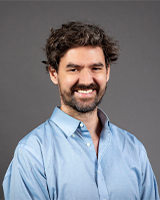
Gabriel Hetland is Associate Professor of Africana, Latin American, Caribbean, and Latinx Studies and Sociology (by courtesy) at University at Albany, SUNY. Gabriel's award-winning research examines politics, democracy, cities, social and labor movements, and climate policy in Latin America, the US, and Europe. He is the author of Democracy on the Ground: Local Politics in Latin America's Left Turn (Columbia University Press, 2023), which won the 2024 New England Council of Latin American Studies Marysa Navarro Best Book Prize-Honorable Mention. Gabriel has written for academic and popular-press outlets including Theory and Society, Qualitative Sociology, Social Text, The Washington Post, The Guardian, New York Review of Books (forthcoming), The Independent, The Nation, Jacobin, The Intercept, Phenomenal World, and New Left Review. Gabriel regularly appears on national and international media venues such as BBC, NPR, Democracy Now, Fox News, Al Jazeera, Radio Canada, The Dig, American Prestige, and Behind the News. He has received fellowships from the National Science and Mellon Foundations and was an alternate for a 2025 Fulbright U.S. Scholar Award to study decarbonization and social justice in Madrid, Spain. He is working on a new book, Paths to Decarbonization, comparing climate justice in Spain, Colombia, and New York State.
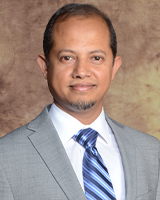
Dr. Imran Islam is an Associate Professor in Textile Development and Marketing Department at Fashion Institute of Technology (FIT). He holds a Ph.D. in Sustainability in Textiles and Apparel from Kansas State University, an M.B.A. in Marketing, an M.Engg. in Advanced Engineering Management, and a B.S. in Textile Technology.
His expertise includes knitting and knit product development, textile sustainability, waste management, and integrating textile technology into design. He has authored or co-authored more than 70 grants, peer-reviewed publications, and conference presentations. In recognition of his teaching excellence, he received the 2023 State University of New York (SUNY) Chancellor’s Award for Excellence in Teaching.
In 2023–24, Dr. Islam was appointed by Mayor Eric Adams to New York City’s Task Force on Environmentally Preferable Purchasing and Disposal of Textiles under Local Law 112. He is an active member of the International Textile and Apparel Association (ITAA) and the American Association of Textile Chemists and Colorists (AATCC). He also serves as a textile expert for New York State Association for Reduction, Reuse and Recycling (NYSAR3) and the Manhattan Solid Waste Advisory Board and is a member of USDA Multi-State Hatch Research Group NC1030.
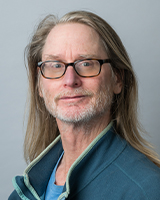
Eric Keeling is an Associate Professor in Biology at SUNY New Paltz, where he teaches Ecology, Conservation Biology, Plant Ecophysiology, Global Change Biology, and Human Ecology. He mentors undergraduate students in independent research projects in ecology and sustainability.
Eric is interested in how human societies affect and depend on ecosystems, value nature, and articulate such values. As a field ecologist, he has studied tree and forest responses to fire, insects, human land use, and climate in western ponderosa pine forests and eastern mixed forests of the Hudson Valley and Shawangunk region.
Eric grew up in a family of musicians, hikers, and academics in Southern California. He has a B.S in Conservation & Resource Studies from UC Berkeley, M.M in Music from San Diego State University, and a PhD in Organismal Biology and Ecology from the University of Montana. Before coming to SUNY New Paltz, he completed a post-doc at Cary Institute of Ecosystem Studies in Culturally Relevant Ecology and Environmental Science Literacy. Recently, he has helped develop NY State’s new K-12 climate curricula, and he is an active contributor to Earthrise Commons, an online community devoted to teaching and practicing sustainability.
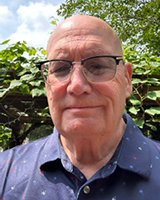
James E. Leopard is a Heating, Ventilation, Air Conditioning, and Refrigeration (HVAC/R) professor and program coordinator at Suffolk County Community College, where he leads curriculum development in refrigeration, heating systems, electrical fundamentals, and building electrification. He specializes in heat pump technology, technician workforce development, and the integration of modern electrification practices into HVAC/R education. Leopard is the author of Heat Pump Primer: Workforce Development, Digital Foundations, and Business for HVAC/R Technicians, texts that support contemporary training in technical, digital, and business competencies for emerging HVAC/R professionals.
Leopard is also a member of the International Ground Source Heat Pump Association, contributing to national efforts to expand geothermal and heat‑pump workforce readiness. In addition to his academic work, he owns SCM Cooling Educational Consulting, where he assists institutions and organizations in developing high‑quality HVAC/R and building‑electrification programs. His approach blends hands‑on technical instruction with strategic workforce planning, ensuring students and technicians are prepared for the rapidly evolving clean‑energy sector.
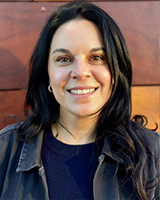
Dr. Caterina Panzeca earned her Ph.D. in Marine and Atmospheric Science from Stony Brook University and went on to a postdoctoral fellowship at the University of Southern California. Her graduate and postdoctoral research took her from Papua New Guinea to Antarctica, where she studied the cycling of trace metals and organic nutrients and their influence on phytoplankton metabolism and atmospheric carbon sequestration.
Since joining SUNY Maritime College, her research has focused on New York City waters, particularly long-term water quality monitoring and the impacts of combined sewer overflows in the East River. Undergraduate students collaborate with her on this research, gaining practical, hands-on experience in environmental monitoring. She extends this work into the community through citizen science initiatives and STEM programming, helping students and residents understand and engage with local environmental issues.
Committed to sustainability education, she developed the college's Environmental Sustainability course and uses project-based learning to integrate sustainability into courses such as Field Methods in Marine Environmental Science, GIS, and Coastal Processes and Management. She also led a Campus Climate Vulnerability and Adaptation Assessment, using the campus as a living laboratory for climate resilience planning and student research.

Page Quinton is a geologist whose research focuses on using geochemical signals preserved in rocks to reconstruct ancient climates and environments. She is currently an Associate Professor at SUNY Potsdam, where she teaches courses in Earth and Environmental Sciences. Her research addresses questions about the causes and consequences of past climate change and has included fieldwork in New Mexico, Montana, Nova Scotia, and even Australia. Much of this fieldwork provides opportunities for undergraduate students to participate in research and develop valuable field skills. She is also interested in scientific illustration and has designed figures and diagrams for use in teaching and public communication.
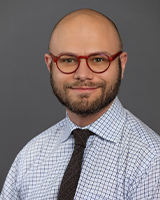
Julian R. Silverman is a chemist, educator, and science communicator. An Assistant Professor in the Department of Science and Math at the Fashion Institute of Technology, he focuses his teaching on providing non-science students with authentic laboratory research experiences while exploring the next generation of sustainable chemicals and materials in the classroom. He partners with organizations including Harrison High School in NY and Beyond Benign to create engaging curricular materials for audiences of all ages, connecting them to local waste resources and strategies to upgrade materials into ingredients for consumer products. At FIT, he teaches across chemistry, materials science, and toxicology, while connecting these to humanities and applied coursework in other disciplines. When he is not on campus, he develops safe and engaging scientific demonstrations for the public and is often found in bars across New York City as a resident speaker for Lectures on Tap. His recent book, How and Why Soap Works, written for a general audience, explores all the science you need to know to wash your hands and get to work.
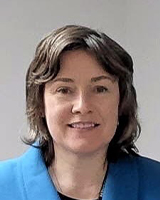
Orla Smyth LoPiccolo is a registered architect, Certified Passive House Designer, and professor at Farmingdale State College and former Chair of the Department of Architecture and Construction Management. Since 2008, she has taught 17 courses integrating sustainability, applied and service learning. She was an inaugural SUNY Sustainability Faculty Fellow in 2025–2026, supporting sustainability through General Education webinars and presentations.
She developed ARC100 Introduction to Architecture and Culture, introducing sustainability through design and field trips. Since 2009, 381 ARC 310 Construction Design students have worked with nine community partners on 100 building projects and one site-planning project, proposing energy-efficient retrofits.
Professor LoPiccolo serves on FSC’s Sustainability Committee, served on the Green Building Institute, initiated the Smart Energy House, chaired the Farmingdale Executive Committee and Applied Learning Review Board, and expanded the Department’s University in the High School program from one course to four and provides professional development for instructors. Her 20-plus papers address sustainability, applied learning, and built-environment education. She participated in the 2024 New York Climate Solutions Community of Practice. Her honors include FSC’s 2026 Campus Community Service Award, 2025 ASEE Best Paper Award, AIA Long Island Educator Award, Innovative Pedagogy Award, and SUNY Chancellor’s Award for Excellence in Teaching.
Past Fellows:

Adam Charboneau is Lecturer of Sustainability Studies at Stony Brook University and an urban and environmental historian whose research interests lie at the intersections of public policy and planning, sustainability, and uneven development. His scholarship focuses on social, economic, and environmental justice, gentrification, grassroots activism, and the production of space. Dr. Charboneau’s published work has examined appropriations of abandonment, the marketing and media representation of local reclamation campaigns, and the social and environmental consequences of neoliberal governance. His teaching includes courses on systems thinking and systems dynamics, sustainable planning and development, collective action and advocacy, and multiple disciplinary approaches. He is currently investigating urban renewal, redevelopment, and sustainability in Long Island, New York, using area case studies as a means of experiential learning for undergraduates.
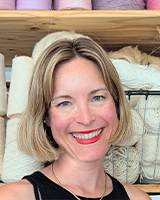
Whitney Crutchfield is a textile expert with a focus on weaving, dyeing, sustainable and low-impact production, and entrepreneurial and marketing strategies. She has been teaching textile practices at the college level since 2012. In addition, Whitney has industry experience as a Textile Designer with Aerie/American Eagle, and she is the founder of the Brooklyn-based educational textile studio, WE GATHER, which offers commission and site-specific interior textile works, hands-on workshops for private and corporate clients, and DIY weaving and dyeing kits for retail customers around the world.
Whitney brings her passion for textiles, their stories, and their ubiquitous global influence to the FIT community. She has special research interests in circularity and waste mitigation in the textile industry, advanced woven structures, and bio-fabricated and electronic materials for weaving. Whitney is the current faculty advisor for FIT’s Natural Dye Garden.
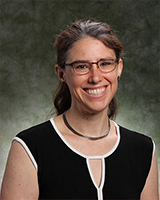
Neyda V. Gilman is an Associate Librarian at Binghamton University in Binghamton, New York. She is the Assistant Head of Sustainability & STEM Engagement, co-founder of the Sustainability Hub and Seed Library, and Librarian for the School of Pharmacy & Pharmaceutical Sciences and departments of Physical Therapy, Occupational Therapy, Speech Language & Pathology, and Environmental Studies. As a librarian she curates information, assists students and faculty with their research, and provides information literacy instruction. She has always valued sustainability, integrating it into personal and work life including all library positions, as well as through campus, professional association, and volunteer work. She created and facilitated the Library Sustainability Committee at Colorado State University, co-created the Sustainability Hub at Binghamton University including the seed library and Equitable Sustainability Literacy Guide, is active on various sustainability related campus committees, currently chairs a committee in the American Library Association’s Sustainability Round Table, and is in the process of starting a Community of Practice through the Association for the Advancement of Sustainability in Higher Education. Her current research focuses on seed libraries and seed saving - particularly with ties to culture, information literacy, sustainability in academia, and sustainability leadership.
Prof. Nick Henshue has a BS in Environmental Education, Master’s in Biology, and PhD in Ecology. He currently looks for ways to utilize earthworm ecology together with Restoration and Soil Ecology to improve habitats in Western New York. Additionally, he is the Director of Undergraduate Studies for the Department of Environment and Sustainability at the University at Buffalo, He is also on the faculty for the graduate program in Evolution, Ecology and Behavior.

Will Hong is an Associate Professor in the Department of Digital Media and Journalism at SUNY New Paltz. He holds graduate degrees from Princeton University and the Tisch School of the Arts/NYU and spent two decades in the film and television industry in New York City. Prof. Hong received a professional certificate in Campus Sustainability Leadership from the University of Vermont in 2015 and has led webinars and presented on sustainability pedagogy innovation at AASHE, ICSD (Earth Institute/Columbia University), the Sustainability Curriculum Consortium Faculty Conference, and the All In: Higher Education, Interdisciplinarity and Our Collective Climate Challenge Symposium at Duke University (2024). He lives in upstate New York with his spouse and their sensitive beagle.
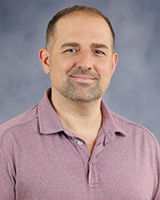
Jeremy Jiménez received his doctorate in International and Comparative Education at Stanford University in 2017. He is currently an Associate Professor in the Foundations and Social Advocacy Department at SUNY Cortland. He has previously taught high school social studies for over a decade in Norway, the USA, and Venezuela. He currently teaches (future teachers) about race, class, gender, and international issues in education and how they intersect with environmental justice. His current research focuses on how to prepare educators and schools for our looming transition towards life after fossil fuels, with special reverence for Indigenous perspectives and conceptions of land stewardship. While his younger self traveled extensively (+180 countries), these days Jeremy prefers to vagabond locally via hiking, biking, and skiing in the woods, or cultivating his permaculture garden at home, admiring the beautiful biodiversity surprises that emerge.
Orla Smyth LoPiccolo is a registered architect and professor at Farmingdale State College, where she served as Chair of the Department of Architecture and Construction Management. Since 2008, she has taught 17 courses, integrating sustainability, applied learning, and service learning. She developed the General Education course ARC100 Introduction to Architecture and Culture, introducing sustainability through design thinking and field trips for students across disciplines. In ARC310 Construction Design, 347 students documented 100 community partner buildings and proposed energy-efficient retrofit strategies, linking coursework to the UN Sustainable Development Goals.
Professor LoPiccolo served on FSC’s Sustainability Committee and Green Building Institute and initiated the renewable energy demonstration project – Smart Energy House. She served as Chair of the Farmingdale Executive Committee, Chair of the Applied Learning Review Board, and member of SUNY’s Carnegie Community Engagement Committee. She also leads the Hicks Hall Conceptual Student Competition.
A Certified Passive House Designer, she has published over 20 scholarly papers on sustainability pedagogy, emphasizing applied learning, interdisciplinary collaboration, and climate-responsive teaching. She participated in the 2024 SUNY Climate Solutions Community of Practice. Recipient of the SUNY Chancellor’s Award for Excellence in Teaching and a first-generation college graduate, she champions equity, access, leadership, and climate literacy.
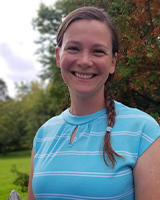
Rebecca Pinder grew up in rural upstate New York where she spent her time exploring the local landscape and the forests of the Adirondacks. Her lifelong fascination with streams and lakes led her to pursue a degree in Biology from SUNY Cortland and she later studied salamander biology at John Carroll University in Cleveland, Ohio, where she received her Master’s degree in Ecology, Evolution, and Behavior. After returning to New York, she attended the University at Albany and studied interactions between earthworms and stream-side salamanders. Earning her doctoral degree, she looked to share her love of the natural world with others and started teaching biological sciences at Columbia-Greene Community College. She is currently the coordinator for the college’s Environmental Biology Program and teaches Environmental Science, Anatomy and Physiology courses as well as General Ecology courses, including the River Ecology course held at the Hudson River Field Station. She still researches salamander and earthworm interactions along streams and is a founding member of the Healthy Soil Collaborative. She spends her spare time gardening and hiking through the Catskill Mountains with her family.

Jack Tessier is a plant ecologist, focusing on forest understory plants. He attended SUNY Geneseo for bachelor's and master's degrees in Biology and SUNY ESF for a PhD in Environmental and Forest Biology. Jack taught for five years at Central Connecticut State University before moving to SUNY Delhi in 2007, where he teaches ecology and environment courses and manages the AS in Environmental Studies and the BS in Sustainability.

Augusta Williams, ScD, MPH is an Assistant Professor at SUNY Upstate Medical University in the Department of Public Health and Preventive Medicine. She serves as the Assistant Director of Upstate’s Public Health Program, as well as the Assistant Director of the Central New York Children’s Environmental Health Center. Dr. Williams examines the impacts of extreme weather and environmental hazards on public health and safety, specifically on workers and children. She also is involved in medical education scholarship, evaluating best practices for disseminating climate and health information to health professional learners. She was formerly a heat safety technical expert at the Occupational Health and Safety Administration. Originally from Lewis County, NY, she earned a BS in biology and atmospheric sciences from Hobart and William Smith Colleges, her MPH from Columbia University, and her doctoral degree from Harvard University. Since starting at Upstate in 2022, she has expanded environmental health educational and research opportunities for students, including the creation of a new climate and health elective course for health professional students.

Jean Yang is an Assistant Professor of Landscape Architecture at SUNY ESF, where her teaching and research focus on making sustainability tangible through creative, participatory methods. A first-generation American and former SUNY Civic Discourse Fellow, she has worked across campuses, neighborhoods, and international contexts to help people see climate literacy not just as a concept, but as something lived and shared.
Before joining ESF, Jean served as Project Manager and Design Lead for Los Angeles County’s first Sustainability Plan and the Upper Los Angeles River Master Plan, integrating resilience, equity, and biodiversity into public policy and design. Today, she translates those lessons into studios and workshops that connect ecological systems with cultural and civic life.
Her work includes the forthcoming book The Activist University (Routledge), which documents strategies for embedding justice and sustainability into curriculum and institutional practice, as well as sticker-based visual toolkits that have been used by the United Nations, the National Park Service, and community organizations from Samoa to Syracuse.
Jean is eager to join the SUNY Sustainability Fellows not only to share these methods, but to learn from colleagues across disciplines. She sees the fellowship as a chance to help build a SUNY-wide community rooted in equity, creativity, and shared learning.